

Braydon Hawthorne Scouting Report
Kentucky's Braydon Hawthorne emerged late in the 2025 recruitment cycle, but his lofty ceiling and enticing long-term potential made him difficult to deny
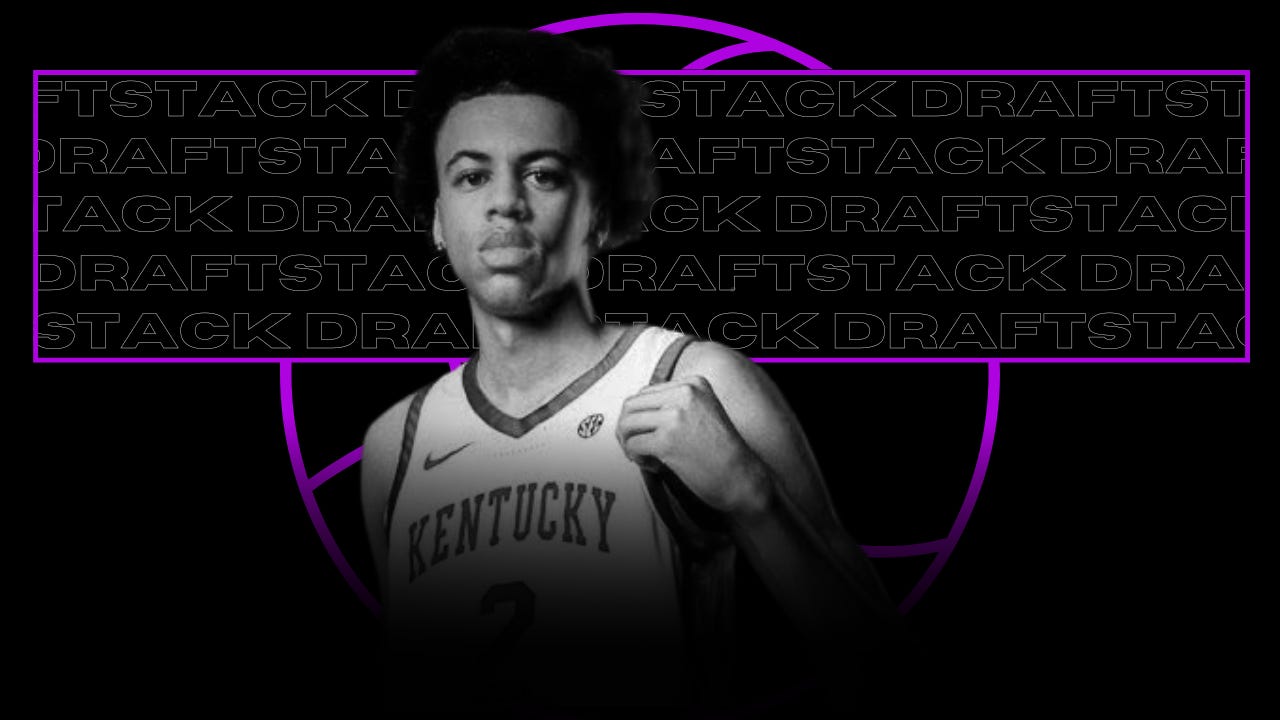
The 2025 high school basketball recruiting class was one of the most illustrious graduating classes in recent memory, with a handful of prospects who project to be NBA stars in just a few years. However, the most interesting recruitment didn’t come via a highly touted five-star prospect or a McDonald’s All-American, but instead, it came from Braydon Hawthorne, a player who rose to prominence incredibly late in his high school career. Although he did eventually commit to Kentucky, the most prestigious and historical program in all of college basketball, he spent most of his prep career as a mid-major prospect. So, why did it take high major coaches so long to come around on Hawthorne, and will he be able to perform on the biggest stages of college basketball once asked to do so? Let’s find out.
Player Profile:
Braydon Hawthorn is a 6’8” and 175lb wing from Beckley, West Virginia who finished his prep career at Huntington Prep after beginning with his hometown Woodrow Wilson High School. He started his senior season with Huntington ranked well outside of the top 100 national recruits but was considered the top recruit from West Virginia. However, a fantastic senior campaign would eventually see him rise all the way into the top 35 in the 2025 class (According to 247). During his senior year, he posted averages of 23.5 points per game, 6 rebounds, and 4 assists against some of the best high school competition in the country.
Before eventually committing to the Kentucky Wildcats and head coach Mark Pope, Hawthorne received an offer from and committed to the West Virginia Mountaineers. However, after head coach Darian DeVries accepted the Indiana job, he would decommit from the program and reopen his recruitment. During this two-month recruitment period, he received offers from Kentucky and Virginia Tech while also garnering interest from Duke and Pittsburgh. He’d eventually commit to Kentucky, joining one of the deepest teams in the country in an effort to develop his skillset and physique instead of being thrust into a major role during his debut season.
Interior Scoring:
A running theme throughout this article is that Hawthorne is the definition of a “work-in-progress" prospect, and his interior scoring is a good place to start to illustrate that idea. At every scoring level, he possesses a few standout traits while lacking others, painting a rather clear picture of what he needs to improve upon throughout his freshman campaign. When it comes to at-the-rim scoring, he’s a high-end transition scorer who seriously struggles to produce in the half-court, despite developing as a self-creating driver throughout his senior season. However, his potential from a rim pressure perspective is real, and this is an element of his development that should be prioritized early on by Kentucky’s coaching staff.
Before I fully dive in, I will admit that I couldn’t find as many games to clip for Hawthorne as a typically do for the prospects I cover in these articles. That’s why I only have one half-court layup on file for him; I trust that he scored in this manner more than once throughout the season. That said, the volume of these attempts relative to his open court attempts is still quite obviously significantly less. This remains the case for every other section of this article, even though most feature more than a singular clip.
For the majority of his career, Hawthorne was not asked to put the ball on the floor and create for himself in the half-court. He often played alongside guards more capable of setting the table, most notable during his time with Phenom United on the Adidas 3SSB circuit, when he played with Darryn Peterson. However, the Huntington coaching staff allowed him to spread his wings late in the season this past year, and he showed some flashes of legitimate ball handling and advantage creation skills. That said, my biggest worry concerning his at-the-rim scoring in the half-court is his limited off-ball movement and play finishing. If he wants to become a rotational mainstay by his sophomore season with Kentucky, he’ll have to drastically improve as an off-ball play finisher in the half-court. I do think he’s skilled enough to achieve this, but his physical limitations greatly inhibit his ability to fight through defenses and find strong scoring position within the flow of the offense.
Where he’s found far greater close-range scoring success is on transition opportunities, scenarios when he doesn’t have to fight through as much contact on his way to the rim. He’s better in these situations both on- and off-the-ball, a clear indication of his increased comfort level in the open court. For being as lanky as he is, he’s not an awkward mover and is quick on his feet, allowing him to get out in transition as if he were a guard. I wouldn’t consider him to be an elite athlete, but he has some vertical pop and possesses incredible length, making for quite the dangerous lob threat. His stride allows him to receive passes on the perimeter before taking two steps and scoring inside without putting the ball on the floor, but that’s not to say he’s incapable of utilizing a myriad of dribble moves to create stronger looks under and around the basket. His success in these situations not only suggests that he’d fit well in the high-octane offense that Kentucky prides itself on, but also that he could eventually incorporate some of these skills into his half-court rim pressure toolbelt.
Mid-Range Scoring:
Hawthorne does a lot of his work from the mid-range, specifically on soft touch push shots and floaters. These shots are a big reason why his half-court at-the-rim volume is so miniscule, because he’s simply more comfortable attempting looks from this range. This is probably because he’s not great at handling contact, a problem he’s able to avoid by putting shots up and over interior defenders instead of attempting to go through them. That said, even if he does become a stronger interior scorer in the future, his mid-range and in-between scoring skills will still be useful as he progresses through his career.
These attempts are probably where we’re best able to see just how much touch Hawthorne really has. Despite him being most known for his outside shooting, I’d argue his scoring from this level best illustrates his long-term potential on the offensive end. If his feel from other areas eventually elevates to the level of his feel from this range, he could become an incredibly talented and well-rounded offensive agent. He’s capable of converting on these attempts both via on- and off-ball actions. He regularly receives a pass in the paint with his back to the basket before turning over a shoulder and putting up a hybrid hook shot, and even though he’s usually incapable of backing down his opponent, his length allows him to get shots off over contests. He can also put the ball on the floor and drive past his defender on the perimeter before putting up an on-the-move floater. For a guy who still has a long way to go from a physical development perspective, his skillset is advanced, versatile, and promising.
Despite being a very strong in-between scorer, Hawthorne needs to make significant improvements as a pull-up jump shooter before being considered a true three-level scorer. He’s shown that he’s capable of knocking down traditional mid-range jumpers, but his volume on these attempts was still lacking throughout his prep career. If he can strengthen his interior scoring abilities, his driving gravity should be strong enough to give him more flexibility from this range. The same is true for improvements in his ball handling and overall on-ball confidence. I’m not sure if he’ll ever have the ball in his hands enough for him to become a true pull-up jump shooting weapon, but if he does reach that level, I think we’d be looking at one of the more intriguing offensive prospects in all of college basketball.
Outside Shooting:
Once Hawthorne committed to Kentucky, all we heard was how great of an outside shooter he was, and while this is true to an extent, one could argue his long-range marksmanship is a bit overrated. Sure, his catch-and-shoot three-point shooting is probably his strongest immediate scoring trait, but I’m not so sure it’s his most intriguing long-term offensive trait. If he were truly the outside shooter that many act like he is, he would probably earn minutes on this year’s team, and I don’t think that’s going to happen. With that being said, he’s a very real off-ball sharpshooter, a skill that will pay dividends for him throughout his career. So, what does he currently look like from long-range, and how could he potentially develop moving forward?
To start, he’s a one-dimensional scorer from beyond the arc, that dimension being catch-and-shoot looks. Despite being a surprisingly good ball handler, he very rarely attempts to create his own looks from long-range. Instead, he hovers around the perimeter and works off screens to create enough space to get his shots off on the catch. He found a ton of success playing that way, and I assume he’ll continue to find that success in the future. He has a fluid shot motion and a high shot release, making his shot replicable and very difficult to contest.
Much like his mid-range jump shooting, his high-end outcome includes being a real on-ball shot creator from beyond the arc. Once again, if that outcome comes to fruition, it means he has become one of the better offensive prospects the sport has to offer. However, I feel less confident regarding this from long-range than I do from the mid-range, not only because we saw less of it during high school, but also because when we did see it, it went worse. I noticed a weird trend concerning many of his off-the-dribble (and some catch-and-shoot) threes, that being horrendous misses. When he misses, he doesn’t just barely miss, he often misses the rim entirely. I assume this is the result of some sort of mechanical issue, and it’s something that Kentucky’s coaching staff will have to address. If he continues to miss in this fashion, I worry that it will negatively affect his confidence not only on long-range attempts, but on offense as a whole.
Passing & Playmaking:
Despite not being a lead ball handler, he found passing success during his final season with Huntington, when he averaged 4 assists per game. This is a fantastic number for the role he played, and even though I don’t have his turnover figures, this suggests that he’ll be a strong passer on the wing throughout his career. If he continues to develop as a ball handler while also strengthening his three-level scoring gravity, he should be able to better flex his passing acumen. Unlike his mid-range and outside shooting ceilings, I don’t think there’s an outcome where he becomes an elite passer, but I feel confident that he’ll be strong connective passer at every level.
During his senior season, once he was tasked with creating more offense off-the-dribble he began to better showcase his kickout passing skills. His size allows him to throw passes over the heads of opponents, creating options that most players don’t have. His gravity from beyond the arc and mid-range is evident in these clips, even though he wasn’t a prolific off-the-dribble scorer from either level in high school. Imagine how much gravity he’d have if he actually became a consistent threat on these shots. Even if his gravity doesn’t evolve in a significant manner, playing within a Kentucky offense that prioritizes the outside shot should naturally support his kickout passing abilities.
He didn’t find as much success finding teammates around the basket, mostly because he rarely found himself in a position to do so. The only clip I have where he throws an interior assist is in transition, which makes sense considering how much of his offense came in the open court this season. In the half-court, he simply didn’t handle the ball in a way that opened up interior teammates. Because of this, I can’t say he’ll be a strong entry passer, but I can rely on his instincts in other areas to trust that he could become better in this area. Much like other elements of his game, this is more of a volume and role issue than anything, and I think he’ll be able to incorporate these passes into his game more often if he emerges as a real on-ball wing.
Defense:
Although Hawthorne has mostly been lauded for his offensive upside as a lengthy wing with on-ball upside, I must admit, I was more intrigued by his defensive output throughout my film dive. I’d argue that his defensive floor is significantly higher than his offensive floor, while his ceiling on both ends are relatively similar. Sure, if he reaches his offensive ceiling he’d bring more to the table than if he were to reach his defensive ceiling, but if I’m projecting him based on his realistic outcomes, I’d project him to make a bigger impact on defense. It’s not difficult to see why; he’s incredibly lanky with fantastic mobility and solid vertical pop. He moves well enough to defend the perimeter, clogs up passing lanes with his inhuman wingspan, and is a very good secondary rim protector. Even if he remains limited on the offensive end, he should be good enough on the defensive end to warrant him eventually making the NBA leap.
He generates a solid number of steals for a myriad of reasons, most notably his long arms, agility, and ability to defend multiple positions. When he’s defending smaller guards along the perimeter, opponents often underestimate his ability to intercept passes, as he’s able to leap lanes even when he starts far away from his matchup. His strides and arms are just so long, he often goes from completely out of the picture to easily intercepting a pass. When he defends frontcourt opponents, he tends to be significantly quicker and more mobile than his matchup, allowing him to beat them to the ball when entry passes are made. It’s also very difficult to throw passes over him as he gets good lift off the ground and, once again, has incredibly long arms. Simply put, he causes a ton of havoc and will likely continue to do so.
For all of the same reasons, Hawthorne is a very good shot blocker for his position. Not only does he pick up blocks at the rim, but he’ll also occasionally block a shot from the mid-range or perimeter. Much like how his ability to leap passing lanes is often underestimated, his ability to block standard jump shots is rarely accounted for by opponents. He’s able to block shots that very few players would be able to block, making him quite the unique defensive prospect. As far as his rim protection is concerned, he combines instincts with his physical profile to make an impact both as a primary and secondary rim protector. He won’t be asked to be a primary rim protector moving forward because of his thin stature, but I believe he could become one of the better help side rim protectors in all of college basketball in the coming years.
Summary:
Before I summarize Braydon Hawthorne’s game, I want to list out any and all of his weaknesses and flaws in order to garner a better understanding of his game in its entirety. As per usual, I must say that there’s nothing wrong with having weaknesses. Every player has countless flaws, but what makes the great players great is not only their ability to maintain their strengths but also improve upon their weaknesses. In Hawthorne’s case, he’s a player who, if he improves upon enough of his flaws, could emerge as one of the most interesting prospects in all of college basketball.
First and foremost, his major foundational weakness, meaning a weakness that causes issues for him in basically every category, is his frame. He’s one of thinnest players I’ve ever evaluated, and I don’t even think he weighs his listed 175lbs. Offensively, contact and aggressive defenders regularly render him almost completely useless. Defensively, he will never be able to defend big guards, wings, or frontcourt players at the professional level if he doesn’t gain weight. This should be priority number one for the Kentucky coaching staff throughout his freshman season.
He lacks a ton of confidence attacking the rim both on- and off-the-ball. I think the clear reason for this is his inability to deal with contact, which as I’ve mentioned is a result of his slight frame. I have difficulty coming to a conclusion on if he’s a good at-the-rim finisher because he just didn’t attempt many half-court looks at that range this year. We’ll see if that changes once he develops physically.
His volume on mid-range pull-up jumpers was surprisingly low this year considering he’d rather operate from this range than at the rim. In the future, if he’s ever asked to create more of his own offense, I’d like to see him grow as a pull-up threat.
To build on that, he’s a weak off-the-dribble outside shooter, an area where he’ll have to improve if he wants to inch toward his offensive ceiling. His handle is strong enough for him to be a better long-range self-creator than he is, so this is probably a comfort and role issue.
As I mentioned earlier in the article, when he misses from beyond the arc, he often misses badly. To me, this suggests some sort of mechanical issue that will have to be addressed by Kentucky’s developmental staff. I’m not a shooting coach/expert, so I can’t put my finger on it, but the results make it clear that something isn’t right.
Relative to his positional peers, his passing is above average. However, a lot of his passing advantages won’t be nearly as present at the college level, namely his height advantage and scoring gravity. College defenders will likely be able to defend him without help for the most part, opening less teammates up and allowing for less easy assist opportunities. He’ll have to adapt to this and figure out how to utilize his passing instincts when the natural flow of the offense doesn’t create opportunities for him.
While his handle is above average for his position and role, he still does suffer from playing in a body that isn’t particularly built to support ball handling. He often keeps a straight back and brings the ball up high, making it easier for defenders to poke the ball away from him. He also can struggle to deal with aggressive defenders and traps; a confidence issue he’ll have to address in the future.
Defensively, his thin frame held him back less than it did on the offensive end during his high school career. This will likely remain the case moving forward, but that doesn’t mean adding weight wouldn’t bolster his defensive abilities. As long as he maintains his mobility once he adds weight, he can only get better on this end of the floor.
To summarize Braydon Hawthorne’s game, one must first balance realistic expectations with and against a lofty ceiling. As of today, he’s a raw player who possesses an intriguing set of offensive skills but who is greatly held back by his developing physical profile. He’s a capable scorer with above average passing and ball handling chops for his position, but almost every one of his skills is limited because of his thin frame. Defensively, he brings a ton of versatility to the table but is still occasionally hindered by his physical weaknesses. Notice a theme? Realistically, he’s a player who, in the immediate, is only capable of what his body will allow him to accomplish. For that reason, he likely won’t see much time on the court until he adds weight and strength, which would better allow him to blossom into the player that many think he could be.
Most of the time, when writing these articles, I don’t spend a ton of summary time talking about ceilings. However, what made Hawthorne the highly touted prospect that he eventually became was his undeniably interesting ceiling. At 6’8”, he has incredibly long arms and long strides and gets good vertical pop. He has a quick release and is capable of knocking down the outside shot with the best of ‘em. His handle at his size and position is striking, but with room to grow. In theory, his trajectory is that of an elite on-ball scoring wing, potential that coaching staffs will attempt to pry out of him at every level. Add to that an already strong defensive presence and you have a player who could emerge as one of the better two-way prospects in the country. Despite him having a lot of work to do before he’ll be able to consistently contribute at the college level, the hope is that by his sophomore or junior season he’ll be able to show some clearer signs of his lofty potential.