

Caleb Wilson Scouting Report
Too Good to Pass On
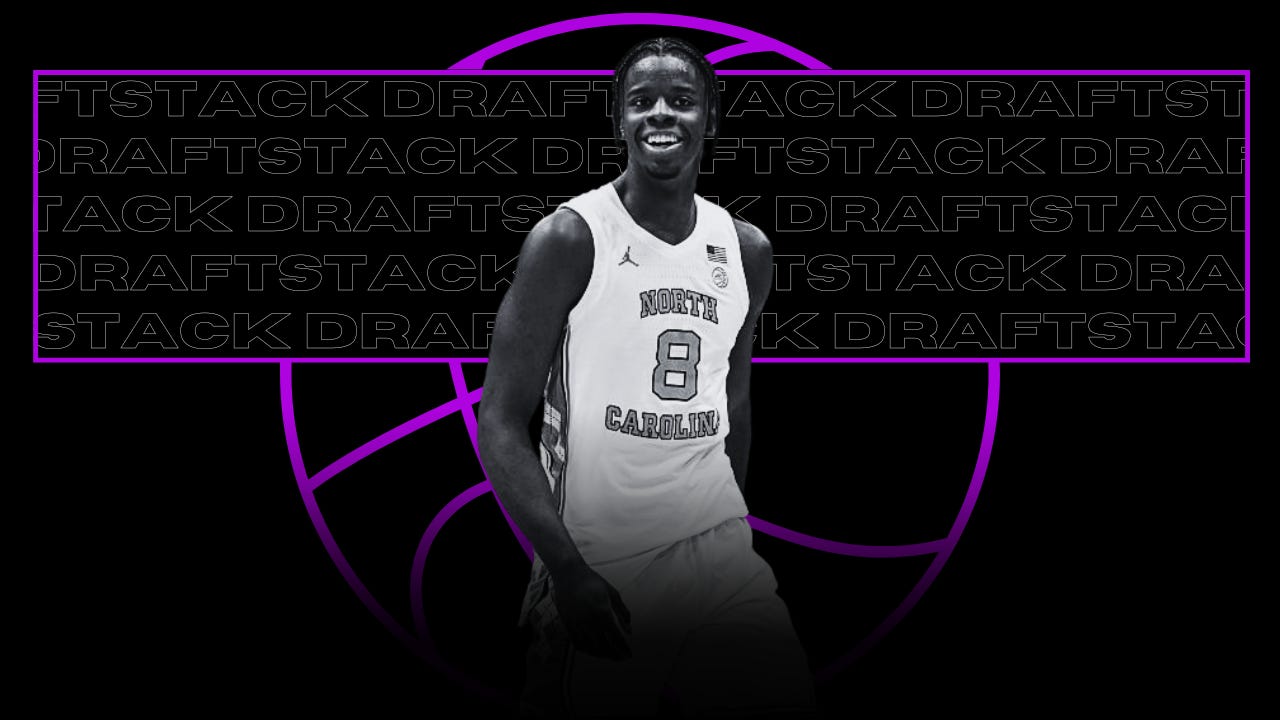
In what has been widely acclaimed as one of the most storied NBA draft classes in recent memory, there appears to be some consensus as to who will be selected in the top 4 in 2026. Despite an abundance of evidence as to why this should not happen, many seasoned prognosticators are still calling for UNC’s Caleb Wilson to fall to the Bulls at 4.
This article presents why this can’t happen for the Memphis Grizzlies front office. Caleb Wilson is one of the most surefire, “can’t miss” prospects you will find, and passing on him would likely be a fire-able offense.
Physical Profile
Caleb Wilson boasts one of the most tantalizing physical profiles in this draft class due to his prototypical size and elite athleticism. At the NBA Combine, Caleb Wilson certainly passed the eye test, measuring out at 6’9.25 without shoes, with a 7’0.25 wingspan, and a 9’0 standing reach. Additionally, it appears that Caleb will be able to add lean muscle mass to his 210.8lb frame. We should expect this to happen sooner rather than later, given Wilson’s work ethic, coupled with the NBA’s distinguished physical training programs.
At the Combine, Wilson’s decent lane agility and impressive vertical athleticism were on full display. Wilson posted a 34.5’’ standing vertical and a 39.5’’ max vertical, both of which can improve as he fills into his body. While his lane agility of 11.17 seconds was towards the middle of the pack in this draft class, ranking 12th amongst big men, his tape reveals that Wilson is able to cover a lot of ground quickly.
Not a Finished Product, But My Oh My Was He Efficient
While his injury curtailed what was on track to be a banner freshman season, Caleb Wilson still managed to be one of the most efficient freshmen in the nation and was just hitting his stride in ACC play when he unfortunately broke his right thumb in practice. In his second to last contest this past season, Wilson almost single handedly willed his North Carolina club to a home victory against Duke, in what was one of the more iconic victories in the recent history of this storied rivalry. Caleb relished the head-to-head matchup against Cameron Boozer, agitating him with his length and athleticism, while on the other end, scoring virtually at will against a bevy of Duke defenders. He finished the contest with 23 points on 8-12 shooting, while also connecting on all 6 of his FT attempts. While the statistics underscore his overwhelming impact on the game in one of the biggest stages of the sport, they vastly understate the degree of difficulty on many of his shots, as well as the defensive attention Wilson drew each possession.
In many ways, the Duke contest was a microcosm of Caleb Wilson’s season. In ACC play, Caleb Wilson shot an impressive 61.7% eFG% (according to kenpom.com statistics), which would have been good for the 7th highest mark in conference [had he finished the season], while his 64.9% TS% would have placed him 5th. Despite the elevation in competition, Wilson’s efficiency jumped in conference play, indicating that as the season progressed, he was becoming more comfortable. Had he continued on his trajectory, it is likely that Caleb would have eclipsed his current numbers. Reverting to other advanced analytics that encapsulate his box score impact in points per 100 possessions (above average player) while on the floor, Wilson’s age adjusted OBPM+ ranks 9th in this class, approximating just how valuable he was for UNC (according to draftballr’s statistical database).
Offensive Tendencies and Areas of Growth
In terms of his tendencies, Caleb Wilson immediately enters the league as one of the most dynamic face up big men in recent memory. His fluid handle, quick feet, and dynamic spin moves enable him to get in the lane and wreak havoc. Despite his developing frame, Wilson is already able to finish through contact at the basket and is capable of functioning as a primary ball handler in transition or attacking from the 3pt line in in halfcourt sets. Importantly, while he did not operate in pick & roll as often as he will at the next level, Wilson was formidable as a role man, scoring on 71.4% of his P&R attempts.
While he will need to diversify his handle at the next level against better defenders and tighten it in transition, Wilson posted a 12.6% TORate according to kenpom.com (which would have placed him in the top third of the ACC), despite usage on 26.4% of his team’s shots when he was in the game. The tape suggests that he was relatively secure with the ball, despite most teams frequently sending double teams at him. In fact, he evinced incredible play strength finishing through contact, which is an area that will immediately translate at the next level. Wilson is extremely dynamic when he gets in the lane and possesses rare footwork, elite body control, and serious hangtime. His 1.36 points per shot at the rim (pps) fall in the 87th percentile of the nation. Significantly, despite being an elite athlete, Wilson plays off of two feet, employing a bevy of shot fakes and misdirection moves. These tendencies rendered him virtually unguardable by bigs at the collegiate level, and this trend should continue in the NBA. In fact, the freshman drew a staggering 6.8 fouls per 40 minutes, which was the 25th best marker nationally.
Importantly, if he clears any space at all, Wilson is able to readjust mid air and opt for fadeaway jumpers, which he shoots right over the top of his man. His faceup midrange jump shots accounted for 16.3% of his shot attempts this past season according to our proprietary datasets. While he connected on an enormous number of difficult contested turnarounds this past season, Wilson could stand to work on his feet positioning and balance, as his weight shifting tends to throw off his shots at times, as he is not always square to the basket. A focus on contact balance in his offseason regiment would enable him to improve on his 45.8% shooting on faceup shots, turnaround jumpers, and fadeaways.
When he attacks the basket, Wilson leaves little margin for error, dunking almost everything that he can, with dunks accounting for 43.2% of his shot attempts at the rim [and 24.4% of his overall field goal attempts via our proprietary datasets]. In fact, according to Synergy Sports statistics, this placed Caleb in the 96th percentile of all college players. In terms of his in-between game, Wilson possesses an effective running one hander, which he often employs out of his spin moves. With nimble feet and sound body control, Wilson is able to maintain his balance and concentration amongst a crowd of defenders. According to our proprietary datasets, Caleb was versatile when driving to the basket, attacking with his dominant hand just 55.5% of the time. His versatility driving either direction, coupled with his crafty array of spin moves, drop steps, and up and under moves, render him virtually unguardable when he decides to get downhill. Importantly, though, Caleb does need to work on finishing with his left hand. When he operated off the left block (especially in conference play), he would often attack with his left before switching hands and finishing with his right. He only finished with his left on 7% of his attempts when driving this side of the basket. Defenses took advantage of this, and he was blocked twice as often driving left as he was with his dominant hand.
Additionally, the talented freshman would be wise to extend the range on his one handed floater (ala Trey Kaufman-Renn) to the medium range, as he currently opts for a two handed push shot, which is largely ineffective. Given his impressive ability to withstand contact, an effective one handed floater would prevent NBA defenders from sagging to the basket when he attacks in a straight line off the bounce. Keeping defenses honest is imperative, as this wrinkle – once mastered – would take Wilson’s game to another level. Moreover, while Wilson is not a traditional back down post threat, improving on his seldom used baby half hook would be an effective move to add once as he develops his lower body strength at the next level.
In terms of his shooting, Caleb must spend time developing his mid range jump shot and extend his range past the NBA three point line if he hopes to reach his enormous potential. As it currently stands, Wilson connected on about 38.9% of his dribble pullup midrange jumpers and a paltry 25.9% of his 3pt attempts, with a meager 1.1 attempts per game. Wilson will have to work on his balance, as well as the consistency of his mechanics, if he hopes to improve on these figures at the next level. While this is his only glaring weakness at the moment, a consistent jump shot would open up driving lanes and bolster every other facet of his game. Overall, Caleb Wilson is one of the most intriguing offensive weapons in this draft class due to his rare athleticism, impressive faceup game, and versatility as a P&R threat.
Rebounding
On the glass, Caleb Wilson possesses the requisite athleticism and physical tools to create additional offensive opportunities for his team, and the wherewithal to secure defensive rebounds and immediately push the ball down court for easy transition baskets. Caleb has one of the quickest second jumps in the nation, and he frequently rebounded his own misses, almost putback dunking some of his own attempts. If the ball is anywhere in his vicinity, Wilson’s relentless pursuit of the basketball is something to behold. He frequently utilizes his length and quick leaping ability to tap the ball to himself, and creates extra possessions for his team on offense. Wilson was even able to rebound off of his own free throw misses on occasion. With all this said, Wilson still needs to continue to develop physically, as this will enable him to better carve out space against bigs at the next level. His 10.5% offensive rebounding % was certainly respectable, but this facet of his game should improve markedly along with his physical maturation. Wilson’s prowess on the defensive glass is even more important for his potential suitor at the next level, as he tended to turn these rebounds into transition opportunities on the other end. Wilson’s 22.3% defensive rebounding % mark fell within the top 80 in the nation, despite playing alongside fellow big Henri Veesaar. After securing loose rebounds, Wilson plays fast with the ball in his hands and is able to lead a fast break, applying pressure on opposing defenses, leading to easy baskets.
A World of Defensive Potential
While Caleb Wilson has a ton of room to grow regarding his positional defense, Wilson’s physical tools and quick reaction timing portend a very positive trajectory at the next level. As one of the most intriguing defensive prospects in a historically good draft class, Wilson sported a 20th best adjusted DBPM+ for his draft class. This baseline is rather remarkable, in lieu of the countless areas Wilson still has to improve on to realize his vast potential at the next level.
Importantly, Wilson projects as a versatile weapon who can switch 1-5, catering to the NBA’s ‘switch everything’ policies and ‘positionless basketball’. He possesses the requisite lateral footspeed to mix it up on the perimeter with guards (something he regularly did at North Carolina), and the length and toughness to contest big men in the paint. His initial quick leaping ability and extraordinary second jump enable him to close out on perimeter shooters at a moment’s notice, and this trend should continue at the next level. When he is thrown a shot fake, Wilson can recovery quickly due to his remarkable second jump and decent IQ. Quantifying his impact, Wilson’s 0.75 Points Per Shot (PPS) on contested jump shots fell in the 80% of the nation according to Synergy statistics. As a help defender, Wilson possesses some of the best recovery reactions, and thus is always a threat to chase down block his opponents.
In terms of his productivity, Wilson displays extremely quick hands, which he uses to steal it and push the ball for easy transition layups. His 2.8% steals% and 4.4% blocks% were both very positive and placed him in the top 20 of the ACC. On the perimeter, Wilson regularly poked the ball away from opponents, tallying countless deflections, and causing opponents to think before driving in his direction. Wilson also was savvy in the passing lanes, regularly anticipating passes, and using these steals to cue fast breaks. In terms of his shot blocking, Wilson proved to be a savant at chasing down opponents and blocking them from behind. Significantly, a large percentage of his blocks came on three point attempts, as he had a particular knack for disrupting opponents attempting to shoot over the top of him.
With that said, this calls to attention some of Wilson’s potential areas for improvement. While he proved to be formidable blocking and disrupting three point shooters in his vicinity, Wilson was often out of position and forced to cover a tremendous amount of ground closing out on jump shooters. According to Synergy statistics, 39.2% of the catch and shoot jumpers Wilson was responsible for defending were ‘unguarded’, indicating simply that he was late to the closeout. This is likely due to the fact that he was still adjusting to the collegiate level (he did not even have a full season under his belt) and was overly reliant on his world class athleticism. Wilson tends to overhelp, swarming and stabbing at the ball, which led to several wide open perimeter jumpers. Importantly, this tendency is very fixable and should improve over time.
Additionally, while he is dynamic switching and picking up guards when defending P&R, Wilson struggles and often gets caught up on screens. They often disrupted his balance and caused him to take a longer path to recover to the ball. This was one of the main ways defenders freed themselves up for open shots against Wilson. In order to combat these issues, Caleb must work on improving his contact balance through strength training to better resist physical contact, as well as focusing on improving his spatial awareness, so that he can better anticipate screens and get around them. Further, improving his balance and over-helping tendencies will also enable Wilson to not over-commit closing out, as he tended to crowd jump shooter’s space and pick up unnecessary fouls.
In terms of his one on one defense, while he is highly capable moving his feet, Wilson often presents with an open stance and avoids contact at the point of attack. On the positive side of this, Wilson committed just 1.9 fouls per 40 minutes, the 11th best marker in the ACC. While he did a nice job moving his feet, Wilson could have been more physical with his man and steered him towards the sideline or baseline. In fact, Wilson gave guards too much driving room to create off the bounce, and this led to him being beat by experienced guards like Boopie Miller. While it will take him some time to adjust to the increased speed of the game, Wilson should makes strides following his jump to the NBA next year. Importantly, when he did assert himself and apply pressure or cut off driving lanes, Wilson was extremely disruptive.
Finally, while he is a highly capable shot blocker, Wilson does not yet excel as a rim protector due to his developing lower body strength – indicating that he should not anchor a defense until he can improve his contact balance. He must do a better job of anticipating the offensive player’s next move and stepping in to draw charges. This too will come with more experience. While he did fight and possess good play strength for his size defending the post a year ago, more experienced players were able to assert their will on the block with a good seal. With that said, Wilson does a nice job of playing passing lanes on post entry feeds, but needs to learn when not to gamble on these attempts.
All in all, Caleb Wilson is a remarkable defensive talent, with the foot speed of a wing and the athleticism to defend multiple positions. With the appropriate seasoning, he should excel at the next level.
Developing Floor Game
In terms of his greatest area of growth at the next level, look for Caleb Wilson to continue to improve as a passer. While he often struggled to make the right decisions when on the move, Wilson was dynamic finding teammates out of the post, as evinced by his 1.15 PPS out of the post (including passes), which ranked in the 88% of the nation. While he already posted the third best Assist Rate amongst forwards in the ACC, his passing and decision making improved markedly in conference play against stiffer competition. His 1.35 Assist-to-Turnover ratio underscored this ability to adequately make decisions and find open teammates, while playing strong with the basketball. Due to the notable threat of his versatile faceup post game, Wilson was easily able to find cutters and look cross court to open perimeter shooters. He often drew double teams, leading to easy opportunities for his teammates. Additionally, as a functional ball handler in transition, Wilson should continue to make strides finding his teammates on the break. Given Caleb’s unselfish tendencies and his willingness to move the ball around the perimeter, it is clear that Wilson can develop into the cornerstone of a contender one day.
Why the Grizzlies Would Be Foolish to Pass on Him
Caleb Wilson has arguably the highest upside in the 2026 draft class, due to his world class athleticism, and remarkable room for improvement along the perimeter. Wilson’s floor game, unselfish tendencies, and tenacity going after the ball should enable him to thrive in a game with better spacing and more skilled teammates. While the Grizzlies are potentially in a transitionary period, with Ja Morant’s future looming as a huge question mark, they should draft a player that adequately represents the ‘grit and grind’ culture of Memphis. If they have Ja Morant at the helm, a Wilson-Morant tandem would immediately cement them as one of the fastest and most exciting pace offenses in the NBA. Even if the Grizzlies find a potential suitor and move on from Morant in the offseason (a decision I would not advise), the Grizzlies should still lean into their Grit and Grind lore and draft the player who has an edge on the court. Overall, Wilson presents the highest upside case of any player in this draft class, and his rapidly developing floor game is something that the Grizzlies need in order to get back into contention.