

Chris Cenac Jr. Scouting Report
Using clues to try and solve the complex equation that is Chris Cenac Jr.'s NBA projection
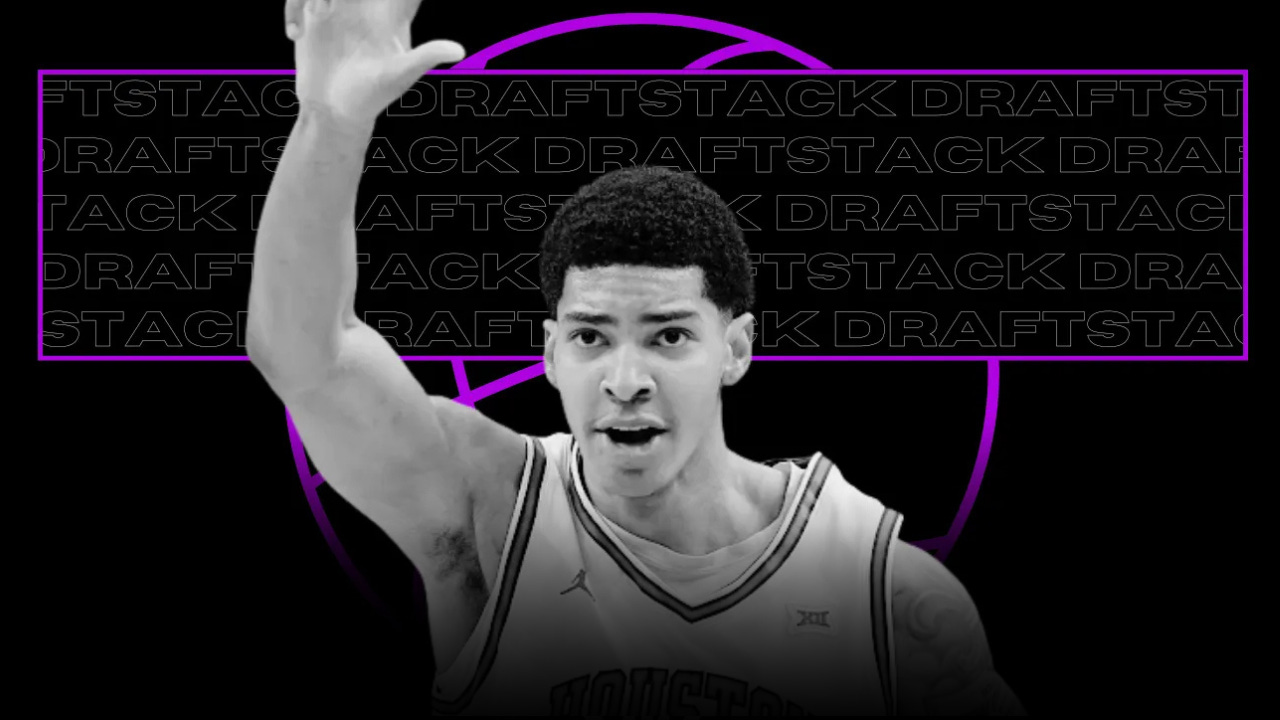
Every draft cycle has a few guys that I just can’t seem to get a clear read on. Whether it’s a bad situation that doesn’t maximize their skillset, or an odd combination of tools and traits that just don’t seem to mesh together correctly — sometimes it’s a combination of both. Every single class has a few. Chris Cenac Jr. is one of those guys for me in the 2026 NBA Draft. The 6-foot-11 big man has been on my draft radar for a while now, dating all the way back to his high school and AAU days. Entering this year, I had Cenac as a clear top-10 prospect on my board, believing that his blend of elite physical gifts, shot touch and the Houston developmental system would make for one of the most polarizing big men in recent draft history. Funnily enough, nothing I believed at the time was false, and yet Cenac still finds himself barely inside my top 20. You’re probably wondering what caused him to slip that far, and to that question, I wish I had a clear answer. Cenac’s year was filled with some very promising highs, but also some equally disappointing lows, leaving behind what I can only describe as a trail of clues as to what his final NBA product will be.
Clue one: The Rare Physical Gifts
The first and most jarring clue as to what Cenac’s future outlook is, is his undeniably jarring physical gifts. It was apparent throughout both his high school career and sole college season that Cenac was a bit more gifted than others around him, but I don’t think anyone was expecting him to test as well as he did at this year’s combine. His height and weight measurements alone weren’t extremely jaw-dropping, coming in around his expected height of 6-foot-10 and a quarter barefoot and weighing in at his exact listing on the Houston team website of 240 pounds. Where the ball really began to get rolling was his wingspan, which came in at 7-foot-5, equaling out with his height for a 9-foot, one-half-inch standing reach. However, even those numbers, albeit impressive, are at best slightly above average for a center in today’s NBA. So you’re probably asking: what made Cenac’s combine so good if his measurements were just good? The answer to that is quite literally everything else Cenac did at the combine.
His standing vertical of 33 inches placed him in the 95th percentile of centers, and his max vertical of 37 inches put him in the 92nd percentile. His 10.76-second lane agility time was good enough for the 99th percentile of centers, and his 2.84-second shuttle time landed him in the 93rd percentile. Compile that all together and average it out against every other center to go through the combine, and Cenac is placed in the top 99.5% of centers from an athletic perspective. I hope you’re starting to see what I’m getting at here. The size alone is good, about what you expect from a center. But when you combine that with athletic testing more reflective of a guard or wing, the picture of just how high his ceiling could be begins to get painted. In order for him to reach said ceiling, Cenac will, of course, have to apply tangible skills to those athletic gifts, but having those tools is definitely working in his favor.
Clue Two: The Shooting “Flashes”
Coming out of high school, Cenac was regarded as a stretch big by many, including myself. And although it would make his whole evaluation a lot easier if I could still place that label on him, I’m just not quite sure if it’s still fitting. Cenac’s outside shot is without a doubt his most intriguing trait long term, as if he can develop into a truly lethal outside shooter, it all of a sudden becomes a lot easier to see him sticking around in the league long term. However, as of now, the shooting indicators are all over the place. On one hand, he is about as keen on jump shooting as any big I’ve seen, reflected almost entirely by 75.6% of his shot diet coming away from the basket. I’ll get into why that number is far too high in a second, but nonetheless, his sheer willingness to shoot, albeit in much higher volume than I’d prefer, is encouraging at worst. When you dive into what kind of jump shots he’s shooting, things begin to break down. At face value, the 6.1 three-pointers attempted per 100 possessions is a great mark for a big man, and even more encouraging is the fact that he made 33.3% of them, landing him in the 85th percentile of bigs in this class. But when you factor in that 62.1% of his entire shot diet comes in the midrange, things don’t look as alluring.
Obviously, one doesn’t shoot that many midrange shots without reason, and in Cenac’s case, it’s for what I find to be a pretty discouraging reason. One could dance around the fact and presume that he shoots that many middies purely because he is most comfortable doing so, and although that may be true, I believe the deeper reason is his poor off-ball positioning. Far too many times in every game, Cenac would drift to the wrong areas on the floor, clogging driving lanes and shrinking an already space-deprived floor. To make matters worse, JoJo Tugler already held down the painted area on a vast majority of possessions for Houston, making his poor positioning all the more detrimental to offensive flow. To add even more insult to injury, Cenac wasn’t all that efficient in the midrange despite attempting so many. His raw percentage of 43.3% looks good on paper, but on a deeper dive, you’ll find that the percentage is heavily carried by Cenac’s proficiency on short midrange shots, making those at a 58.3% clip. A good portion of those shots came off feeds in the pick and roll, dunker-spot dump-offs or the occasional post touch — or in other words, they came in actions he was directly involved in. In his other possessions, where he was tasked with being an active off-ball mover and finding the right areas to fill, things began to crumble. Cenac shot just 37.8% on his long midrange attempts, making those shots objectively bad for the offense as a whole. Even more frustrating was the fact that he would constantly settle for these shots, even turning down somewhat open threes on occasion in favor of attacking a closeout and pulling up for a long two. As a result of this mentality and shot diet, opposing teams were often comfortable sagging off Cenac, giving him room to make decisions with the ball in his hands, an area in which he is objectively not great.
Video via “League Him”
As for his future outlook as a shooter, I’m not exactly sure what to think. Cenac’s form is solid enough, showcasing a repeatable up-and-down motion with a high release point that he finishes with a clean flick despite flaring his shooting elbow out on the gather. But even then, his 54.6% true shooting percentage and 62.1% free-throw percentage suggest that there might be legitimate touch concerns. I’d love to completely buy in on the flashes and willingness he has shown, believing that with the right freedom he can develop into a great shooter. But in all reality, Cenac will likely need a coaching staff that is both patient with his shot development and capable of greatly helping his off-ball positioning and shot diet if he wishes to become a truly effective outside shooter. In other words, I’m skeptical, but encouraged.
Clue Three: The Big Man Things
I hope I’m not ruffling any feathers when I say that I prefer big men who do the big man stuff. I know, I know, it’s crazy to think that I want the guy who’s often the tallest and heaviest on the floor to physically impose his will on the game, but I can’t help believing what I believe. All jokes aside, it’s self-explanatory why NBA teams and evaluators alike are going to be drawn to the bigs that are masters of the traditional aspects of the position. In Cenac’s case, much like every other part of his game, it’s a mixed bag. But even with that bag being mixed, he still does a lot of things that will undoubtedly appease that crowd. The first thing that jumps off the page when evaluating this sector of his game is also what is likely the most developed portion of his game: rebounding. Although I wouldn’t place the title on him necessarily, one could make a very fair argument that Cenac is the best rebounder in this class. For one, he relentlessly attacks the glass on both sides of the floor. Cenac is great at understanding the general area where the ball will land, relying on his motor and athleticism to make up for any lost ground. He uses every bit of that 240-pound frame and 37-inch vertical once the ball is headed his way, capable of absorbing contact, bumping guys out of the way, before rising a full head above the pack to grab the board. Numbers back this up too, at least on the defensive glass, as Cenac posted a 26.1% defensive rebounding rate last year, putting him in the 83rd percentile of big men. It wasn’t just him grabbing rebounds either, as Cenac flat out took offensive rebounds away from the opposition. Opposing teams grabbed two fewer offensive rebounds per 40 minutes with Cenac on the floor, putting him in the 90th percentile of big men. His 10.1% offensive rebounding rate looks a bit more pedestrian, but the way I see it, that number being lower is purely based on situational context. For one, Cenac sharing the floor with Tugler means there is a constant “competition” on the offensive glass. And since Tugler spends a far greater amount of his time around the basket, naturally he is given more opportunities to find offensive rebounds than the more perimeter-based Cenac. I will concede that in order to fully maximize his rebounding capabilities, a team will have to take time to work on his overall offensive positioning. But at worst, he has the foundation of a great rebounding prospect.
Video Via “No Ceilings”
Another area that I find Cenac to be proficient in is interior finishing. Now, I will preface all of what I am about to say with the fact that I am well aware that he struggles to get to the rim to start with, and that is something that I will get into later. However, on the somewhat rare occasion that he does get all the way to the basket, he rarely misses. Last season, Cenac converted on 77.5% of his rim looks, with over half of his makes being dunks. Cenac does a great job of using touch and athleticism around the basket, finding angles and open areas to sneak through for a bucket. That athleticism also makes him a great lob threat when he gets the opportunity, using his immensely wide catch radius to grab balls and put them through. Even when extending out a bit more, Cenac remains efficient, making 62.5% of his shots from 2-4 feet. In an ideal world, I could cut this off here and bask in the positives of his big man game. However, like I’ve reiterated seemingly 1,000 times, this isn’t a simple evaluation, and for every great “big man” thing Cenac does, there is seemingly a layer of negative stipulations attached.
Clue Four: The Not So Big Man Things
Coming into his freshman year at Houston, the expectations for what would be asked of Cenac weren’t exactly clear. It was obvious that he was talented enough to warrant heavy playing time, but as I’ve mentioned a good amount already, Tugler was already manning the center spot. As a result, head coach Kelvin Sampson had to put his one-of-one basketball mind to work in order to figure out how he was going to get both of them on the floor. Because of this situation, Cenac was placed in more of a hybrid big-wing role that left him roaming around without direction far too often. Although the Houston offense was primarily very potent, led by the immensely talented Kingston Flemings, who could often hit tough shots to draw them out of otherwise poor offensive scenarios, the team as a whole still had a lot of dysfunction. This was likely the first time in Cenac’s life where he was asked to play an ancillary role, feeding off others and letting the game come to him rather than being the focal point of the team. He seemed lost navigating the midrange, moving from block to block, and struggled to remain patient in the right spots. Because of this, pick-and-rolls became more difficult for Flemings and Milos Uzan, and the offense in general became very shot-maker dependent. Cenac did become more comfortable as the season went on, learning how to better assert himself and be a positive factor, but he was still far from perfect.
Cenac also wasn’t asked to be a traditional pick-and-roll big man for reasons that are likely connected to both his skillset and situation. For one, he wasn’t a relentless rim attacker — at all. Despite being as physically gifted as he is, Cenac attempted just 4.6 rim attempts per 100 possessions, landing him in the 6th percentile of big men. Rim attempts accounted for just 32.3% of his shot attempts, with most of them being easy, uncontested looks or putbacks. Cenac also wasn’t very aggressive when he got the ball inside, often choosing fadeaways or difficult angles rather than going up strong, reflected in his putrid 19.7% free-throw rate. The perimeter and midrange game are cool and will definitely be huge weapons for him at the next level, but in order for Cenac to truly maximize himself as a player, he will have to be more bought in as a rim finisher. I am not ignorant to the fact that having a big who was basically locked into scoring strictly around the basket forced Cenac to play outside the paint more often than what will likely be asked of him at the next level. But nonetheless, it’s an issue worth solving.
Beyond the offensive issues, I find myself baffled by the projection of Cenac as a defender. Despite being a freak athlete for the position, he posted just a 2.6% block rate, along with ranking in only the 50th percentile as a rim deterrent and the 30th percentile as a rim protector. Obviously, Tugler took on most of the weak-side rim protection duties for Houston last season, along with serving as the primary anchor of the team defense. Even then, Cenac had moments where he was asked to be the team’s rim protector and anchor, along with even more reps in pick-and-roll coverage where he could have proved himself as an elite rim protector and didn’t. Rather, nearly all of Cenac’s positive defensive flashes came when he was asked to switch onto smaller players and wings, an area where he very clearly thrived. There, his athletic tools actually did pop, as Cenac’s mobility and foot speed for a player his size are truly rare gifts that are typically reflective of All-Defensive upside. The Cougars often trusted Cenac to take on other teams’ primary wings, a matchup he typically thrived in. Not only could he slide his feet and cut off ball handlers, Cenac also used his low center of gravity and solid base to catch guys with his chest and truly reset their momentum on drives. The big fella averaged 5.4 stops per game, a number almost unheard of for a player his size, landing him in the 96th percentile of centers. Along with that, opposing players were less efficient when being guarded by him, shooting 0.8% worse on both midrange and three-point attempts when the closest defender was Cenac. This is truly special stuff. He even guarded the likes of AJ Dybantsa, who, albeit, gave him the business, but even there Cenac had moments of true defensive greatness. Whether he can couple these flashes of greatness with improvement in the more traditional big-man areas is an adventure for an NBA team to embark on, but for now, the upside remains fascinating.
Clue Five: The Impact
What makes Cenac truly a confusing and polarizing prospect isn’t really anything I have already mentioned. Are all of those things factors in his overall evaluation? Yes, but there have been countless “raw” big men to come through college basketball with unique profiles who were easier to grasp than him. What makes Cenac a true outlier prospect is his impact on the game and, more specifically, his winning impact. Typically, with prospects as raw as him, their impact on the game is minimal, if not negative, as more often than not they just don’t have the tangible skill to truly make their presence felt. In Cenac’s case, almost the exact opposite is true.
Last season he posted a 6.1 BPM and a +10.1 net rating, putting him in the 74th percentile of prospects. Offensively, his impact was within reason, posting a 3.0 ORAPM, which put him in the 51st percentile of centers, and a 3.1 OBPM, which put him in the 94th percentile. One could fairly argue that those somewhat impressive feats were heavily reliant on the situation and talent around him. And although those same arguments could be tossed around for his defensive impact, they would undoubtedly be far more flawed. Cenac posted a 3.0 DPM last year, which put him in the 99th percentile of centers, a negative 4.1 DRAPM, which put him in the 95th percentile of bigs, and his 92.2 defensive rating was the best of any prospect in this year’s class, regardless of position or situation. In other words, his defensive impact was one of one.
Video Via “No Ceilings”
Does the tape reflect impact to this great of an extent? God no. But it at least shows that, through all of his flaws and shortcomings, Cenac was still able to be a wildly impactful contributor to a very good team, placing a very sanguine cherry on top of what is a wildly confusing evaluation.
Wrapping it all Up
And now we are left here. All the clues as to who Cenac could be are laid out in front of us, and his outlook remains as puzzling as ever. On one hand, he has the physical gifts and overall flashes of an All-NBA level big, but he is trapped in the mindset and playstyle of a forward or wing. All of the clues suggest that Cenac is an immensely talented player trapped in a situation that was beneficial for his current standing, but wasn’t able to fully encapsulate who he could become down the line.
However, the one thing I did gain from watching Cenac last year was hope. It’s so rare to see a 19-year-old kid come into a system that doesn’t benefit him, and yet he still was, by all accounts, coachable and improved immensely as the year went on. Cenac is, without a doubt, a “project player.” Whatever team chooses to bring him in will have to both recognize which tools can be exploited to make him great, along with having a patient and coordinated developmental plan that can help him reach his high-end outcome.
Because of this billing, he will remain a mystery man, at least for now. There is a very real world where Cenac’s outcome is that of a bust, and he sees himself out of the league in just a handful of years. But, in another very real world, he could become a star, developing into one of the most versatile weapons at the center position very early on. Where will he actually land? Probably somewhere in the middle. Ultimately, his future remains uncertain, but the range of outcomes attached to his name is what makes Cenac one of the most fascinating bets in the 2026 NBA Draft.
Would love some explanation on how his physical profile compares with the big athletic PFs of our league, like Siakim. His value will be greatest IMO if he can play the 4 like Siakim
I like Cenac but I also fell for Anthony Randolph