

Christian Anderson Scouting Report
An overview of the shot making engine driving Texas Tech's offense.
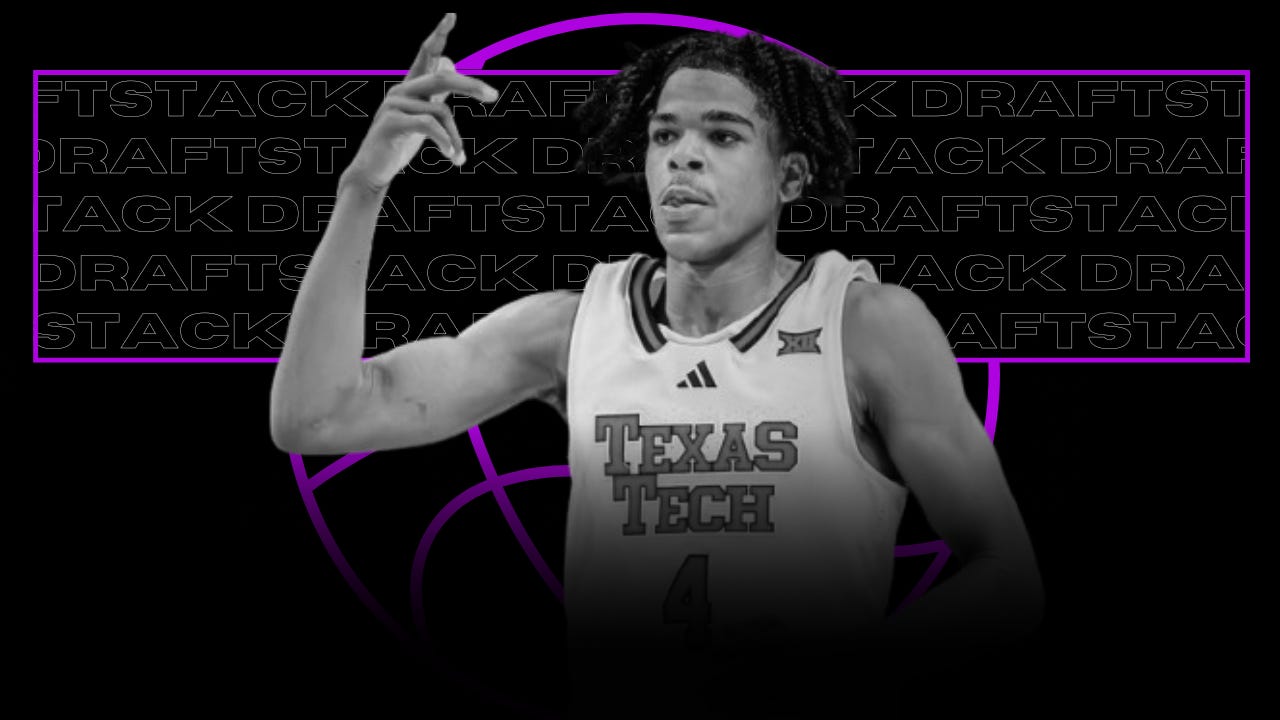
Texas Tech’s offensive identity has increasingly centered around Christian Anderson, a dynamic lead guard whose emergence as a high-usage creator has elevated the Red Raiders’ ceiling. In a system that leans heavily on guard play, Anderson has taken on primary initiation duties, blending perimeter shot creation, advanced pick-and-roll orchestration, and scoring versatility.
Through his sophomore campaign, Anderson has made a clear leap into one of the more productive guards in the country, averaging roughly 20 points and 7+ assists per game while maintaining strong efficiency across a demanding offensive role. His ability to dictate tempo, stretch defenses with deep shooting range, and create for others has positioned him firmly on the NBA radar.
Unlike traditional explosive lead guards, Anderson operates with a pace-driven, skill-oriented approach, relying on timing, feel, and shot-making gravity rather than overwhelming physical tools. That stylistic distinction will ultimately define both his pathway and variability at the next level.
Let’s break down his profile, translatable skills, and long-term NBA outlook.
Player Bio
Height - 6’3”
Weight - 178 lbs
Wingspan - 6’4.5”
Draft Age - 20
Position - Guard
Nationality - American
The Profile
Pace & Poise: Operates at his own tempo. Uses hesitations, change of speeds, and dribble cadence to manipulate defenders rather than relying on burst. Comfortable late-clock and in high-leverage situations.
Feel for the Game: High-level offensive processor. Anderson shows advanced command in pick-and-roll reads, consistently identifying weakside rotations, tag defenders, and timing windows. Plays with patience and rarely looks sped up despite heavy on-ball responsibility.
Competitiveness: Confident, aggressive scorer with clear shot-making mentality. Willing to take and make difficult shots. Offensive burden hasn’t deterred engagement level, though defensive intensity can fluctuate.
Athleticism: Average by NBA guard standards. Lacks elite first-step explosion and vertical pop. More fluid than dynamic. Functional agility and balance are positives, but physical tools are not a driving force in his profile.
Key Takeaways: Anderson’s combination of shooting gravity, pick-and-roll feel, and offensive versatility positions him as a plug-and-play guard capable of contributing early in his career. His game is rooted in skill and decision-making, giving him a strong foundation to stick at the NBA level even without elite physical tools. Teams value guards who can create advantages with the ball while also spacing the floor off it, and Anderson fits cleanly into that modern archetype. While not defined by physicality or defensive impact, his confidence, shot-making ability, and comfort operating as either a primary or secondary initiator make him an appealing option for teams targeting backcourt scoring and playmaking in the late first to early second round range.
Offense & Defense
Expanded Offensive Role: Currently operating as a high-usage offensive engine, Anderson has taken a clear leap as both a scorer and facilitator—producing at a near 20 PPG / 7+ APG clip while maintaining solid efficiency. The jump in responsibility is evident in his on-ball volume, where he’s creating out of ball screens, generating offense off the dribble, and carrying perimeter scoring duties. His ability to scale production while maintaining efficiency speaks to both his skill level and offensive adaptability.
Off-Ball Value: Provides real utility away from the ball due to his shooting gravity. Anderson is a capable catch-and-shoot threat with range that stretches defenses, allowing him to function alongside other primary creators. His ability to toggle between roles enhances lineup flexibility and overall offensive flow.
On-Ball Creation: Anderson thrives in pick-and-roll environments, where his pacing, handle, and shooting threat allow him to consistently generate advantages. He’s comfortable operating deep beyond the arc, forcing defenders into extended coverage and opening driving and passing lanes. While not reliant on burst, his craft and timing allow him to create workable separation and initiate offense effectively.
Playmaking Impact: A true strength of his profile. Anderson processes the floor well, delivering accurate reads to shooters and rollers while limiting careless mistakes. His assist production reflects genuine playmaking feel, not just usage. He can function as both a primary initiator and a secondary connector within structured offense.
Defensive Outlook: Not a defensive playmaker at a high level, but shows flashes of anticipation with active hands in passing lanes. Limitations stem from frame and physicality, which can impact his ability to contain stronger guards and navigate screens consistently.
Key Takeaways: Anderson’s development into a high-level offensive creator is highly encouraging. His combination of shooting, playmaking, and role versatility gives him a clear pathway to NBA minutes. While his defensive impact may not be a driving force early, his ability to space the floor, create offense, and make sound decisions will be what earns and sustains his role. In a league that prioritizes offensive efficiency and guard versatility, Anderson fits the mold of a player who can contribute within a variety of lineup constructions.
Areas for Growth
Strength & Contact Finishing: At 6’3”, 178 pounds, Anderson’s frame can limit effectiveness around the rim and in contested situations. Improving functional strength and body control will help him finish through contact, absorb bumping on drives, and extend his scoring inside the paint.
Defensive Positioning & Consistency: While competitive, Anderson can be exploited on switches or against bigger, stronger guards. Developing anticipation, lateral footwork, and defensive awareness will help him avoid fouls and be a more dependable perimeter defender in NBA rotations.
Consistency Off the Catch: Anderson’s shooting range and pull-up ability are NBA-ready, but he will need to translate his high-volume college shooting into efficient spacing at the next level. Limited minutes and faster defensive rotations in the NBA mean he must knock down open threes and spot-up opportunities at a high rate to remain on the floor.
Advanced Ball-Handing & Creation: While Anderson excels operating within the flow of the offense, he is still developing as a self-creating scorer against NBA-caliber length. Expanding his repertoire with hesitation moves, change-of-direction drives, and finishes with either hand will allow him to generate more off-the-dribble opportunities and reduce dependence on assisted shots.
Key Takeaways: Anderson’s growth areas are mostly refinements that will unlock his full potential rather than barriers to early NBA impact. His shooting, pick-and-roll IQ, and offensive versatility already make him a rotation-ready backcourt option. If he continues improving off-the-dribble creation, finishing through contact, and defensive consistency, he has the tools to become a high-usage starter with scoring and playmaking impact.
NBA Projection & Player Comparison (Style)
Christian Anderson projects as a high-IQ combo guard with scoring and playmaking versatility, capable of contributing immediately in a rotation and scaling into a more prominent role over time. His shooting gravity, pick-and-roll processing, and ability to operate on or off the ball make him an attractive option for teams seeking a backcourt complement to a primary star. Continued improvement in off-the-dribble creation and finishing through contact would elevate him from a rotation scorer to a high-usage starter.
NBA front offices increasingly value versatile, role-scalable guards who complement high-usage primary creators. Anderson fits this mold, capable of spacing the floor, reading pick-and-roll actions, and contributing both on- and off-ball. In a modern NBA system, he can immediately slot as a secondary playmaker, providing shooting and floor-spacing around a star while relieving pressure on the primary ball-handler. His intelligence and timing allow him to operate effectively without dominating possessions, which is critical in high-powered offenses.
Anderson’s profile is particularly suited to teams that rely on motion offenses or multiple ball-handlers, where spacing and decision-making are at a premium. Think of a situation similar to the Boston Celtics’ rotations around a lead guard like Jayson Tatum—Anderson could complement a primary scorer by creating lanes, reading rotations, and providing perimeter shooting without requiring the ball in his hands every possession. His versatility allows coaches to deploy him in dual-guard lineups, small-ball backcourts, or alongside bigger wings, making him a flexible piece for a variety of schemes.
Stylistically, Anderson resembles guards like Tyrese Haliburton or Derrick White—players who combine floor-spacing, playmaking, and off-ball awareness. He may not overwhelm opponents with athleticism, but his skill, basketball IQ, and shot-making ability give him a clear path to NBA minutes and the potential to grow into a high-usage role if needed. In systems that emphasize spacing, efficient reads, and complementary scoring, Anderson provides the kind of versatility teams covet.
Final Evaluation
Texas Tech guard Christian Anderson is one of the more intriguing under-the-radar prospects in the 2026 NBA Draft class. His combination of high-IQ scoring, pick-and-roll vision, and shooting gravity gives him a strong floor and a clear pathway to a sustained NBA career. Anderson fits the archetype teams increasingly prioritize—versatile backcourt pieces who can stretch the floor, make timely passes, and operate efficiently in half-court and transition offenses. As his off-the-dribble creation and perimeter finishing continue to improve, his ceiling rises from a reliable rotation guard to a lineup-stabilizing combo guard capable of contributing in late-game situations. In a modern NBA focused on spacing, pace, and analytic-driven schematics, Anderson’s skill set and adaptability make him a prospect organizations can trust early in his career and lean on in high-leverage moments. He is a confident, composed competitor—plain and simple.