

Jack Kayil Scouting Report
Breaking down each an every aspect of Jack Kayil, one of the more underrated overseas talents in the 2026 draft's game
Since I’ve started publishing my work covering the NBA draft, I have been very open about struggling to evaluate overseas talent. Not due to me not being able to identify talent or a lack of resources to research players, but rather because I struggle to scale impact and production across different pro leagues, cross-comparing and projecting what it will look like in the NBA. However, this year I believe I have turned a corner, gaining a better understanding of a lot of prospects and feeling a lot more confident with my overseas evaluations. However, one name that continues to give me issues is Jack Kayil. I first heard of Kayil last summer, as he played a pivotal lead guard role on a loaded U19 Germany team that featured other NBA-level talent such as Hannes Steinbach, Christian Anderson Jr. and Declan Duru Jr. — maybe a bit of a stretch with the last one. But nonetheless, Kayil was sharing the court with multiple NBA-level talents and still finding a way to stand out and produce, posting averages of 11.1 points, 3.6 rebounds and 6.6 assists, while also posting the third-best efficiency rating on the team at 13.1.
His performance in FIBA built some hype around his name heading into a new season with a new team, and yet almost eight months went by and I almost forgot about Kayil entirely. No hype around him was circulating through draft spheres throughout the entirety of his season, and I only rediscovered him after hearing he committed to Gonzaga. Fast forward a few weeks and after a few interviews with NBA teams, and all of a sudden Kayil is all in on the NBA draft, starting his prep to make the leap. This came as a shock to me, but I gave him the benefit of the doubt, diving into a light scout of him, taking a look at the numbers and some of his tape. However, after doing my initial scout on Kayil, I came away very unimpressed — in fact, I didn’t come away with a draftable grade on him. Despite that, the hype around Kayil only continued to grow, with rumors beginning to circulate that he has a draft promise from a team, leaving me even more confused given that I viewed him as an Exhibit 10 guy. But I chose to bite the bullet and trust that NBA teams are smarter than me, doing my due diligence and reopening the book on his evaluation. Except this time, I went all in, searching through every nook and cranny and, well, I came back a bit higher on him, but I remain very skeptical.
Impact on a Pro Stage
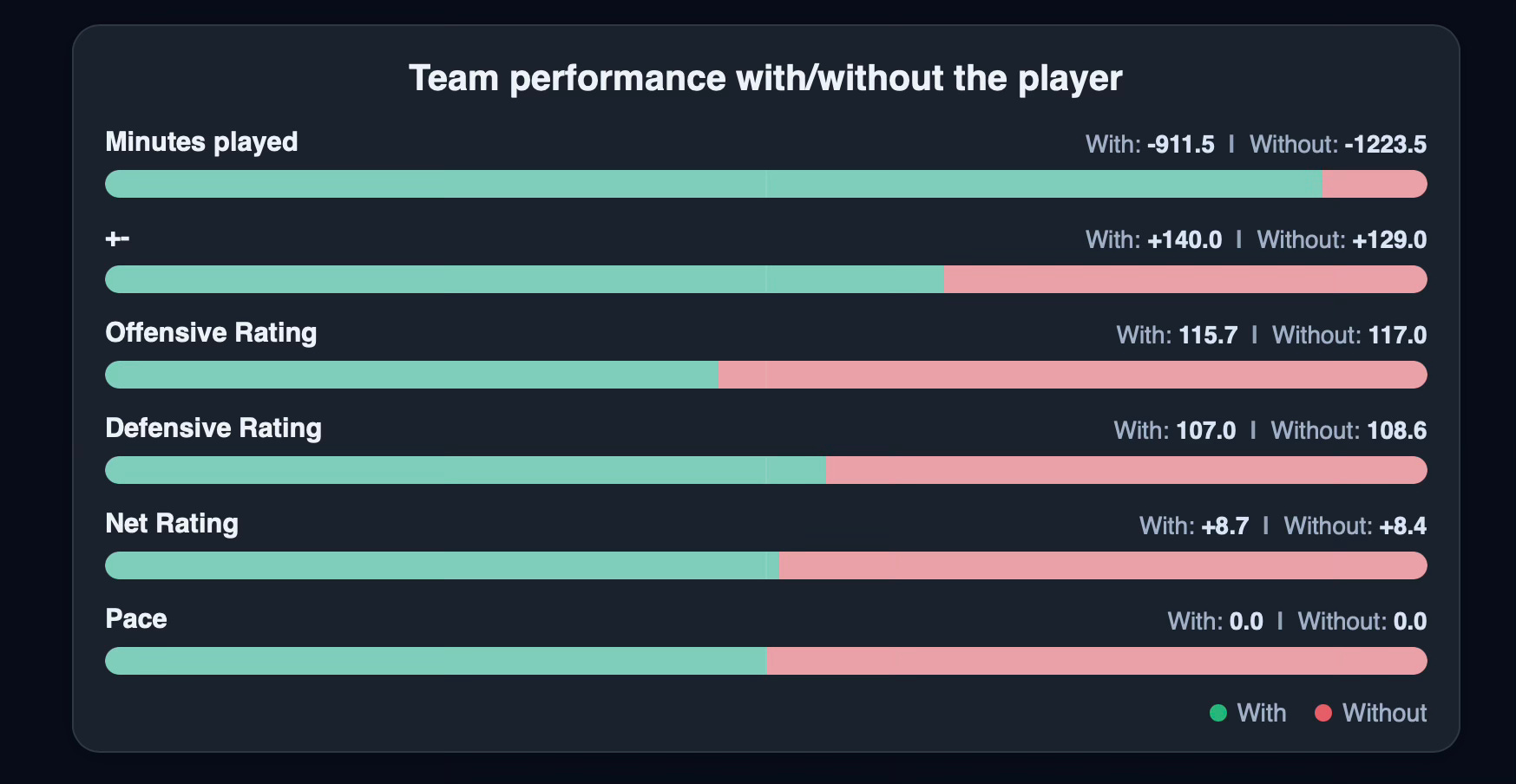
Before I even begin to dive into Kayil's skill set, it's without a doubt worth pointing out the fact that he has been able to sustain high-level production against high-level competition for a long time now. There aren't many 20-year-olds out there who would be able to log averages of 12.5 points, 2.8 rebounds and 3.5 assists per game in Germany's top league, but Kayil did just that. Whether those numbers truly impacted winning basketball on a grand stage is a question in itself, as his 3.8 net rating and the fact that his team was just 0.3 points better per 36 minutes with him on the floor versus off suggest that he was, at best, a net neutral for his team. This is further supported by his 111.2 net rating and 106 defensive rating, both of which grade out around average in the EasyCredit BBL. However, even if that seems underwhelming, Kayil is still able to hold his own and win his minutes as a 20-year-old competing against grown men, something the vast majority of prospects in this year's class can't say. He has proven that he can hold up both mentally and physically while playing "up" in competition, and that undoubtedly carries some weight. Whether that success is sustainable when leveling up to the very top tier of physicality and athleticism in the NBA is a question yet to be answered, but to this point, Kayil has given no reason to believe that it can't be.
Graph via Data4Basket
Athleticism and Craftiness
One of the first things that stands out to me when trying to project his future is his positional size. Kayil wasn’t able to measure in at the NBA combine, as being absent from the event prevented him from participating in the various testing and athletic drills. However, at EuroCamp his height and wingspan were measured, coming in at a solid 6-foot-3 and a half barefoot with a 6-foot-5 and three quarters wingspan. Neither measurement is groundbreaking, but both are more than ideal for someone who projects as a guard in the modern NBA. As for his athleticism, that’s where things begin to break down. Kayil is by no means a bursty or uber-athletic guard who can create advantages solely off raw athletic gifts. Rather, he relies on his strength and understanding of angles to set himself up, using his upper-body strength to work through guys’ chests and earn his way to spots. This plus positional strength also works surprisingly well in his favor in the post, as oftentimes Alba would trust him on the low or mid block to work through his defender en route to two points. Albeit, posting up will likely be toward the bottom of the totem pole in regard to the ways Kayil can impact the game at the NBA level, but being able to exploit smaller defenders is still a valuable skill to have.
Deep Offensive Repertoire
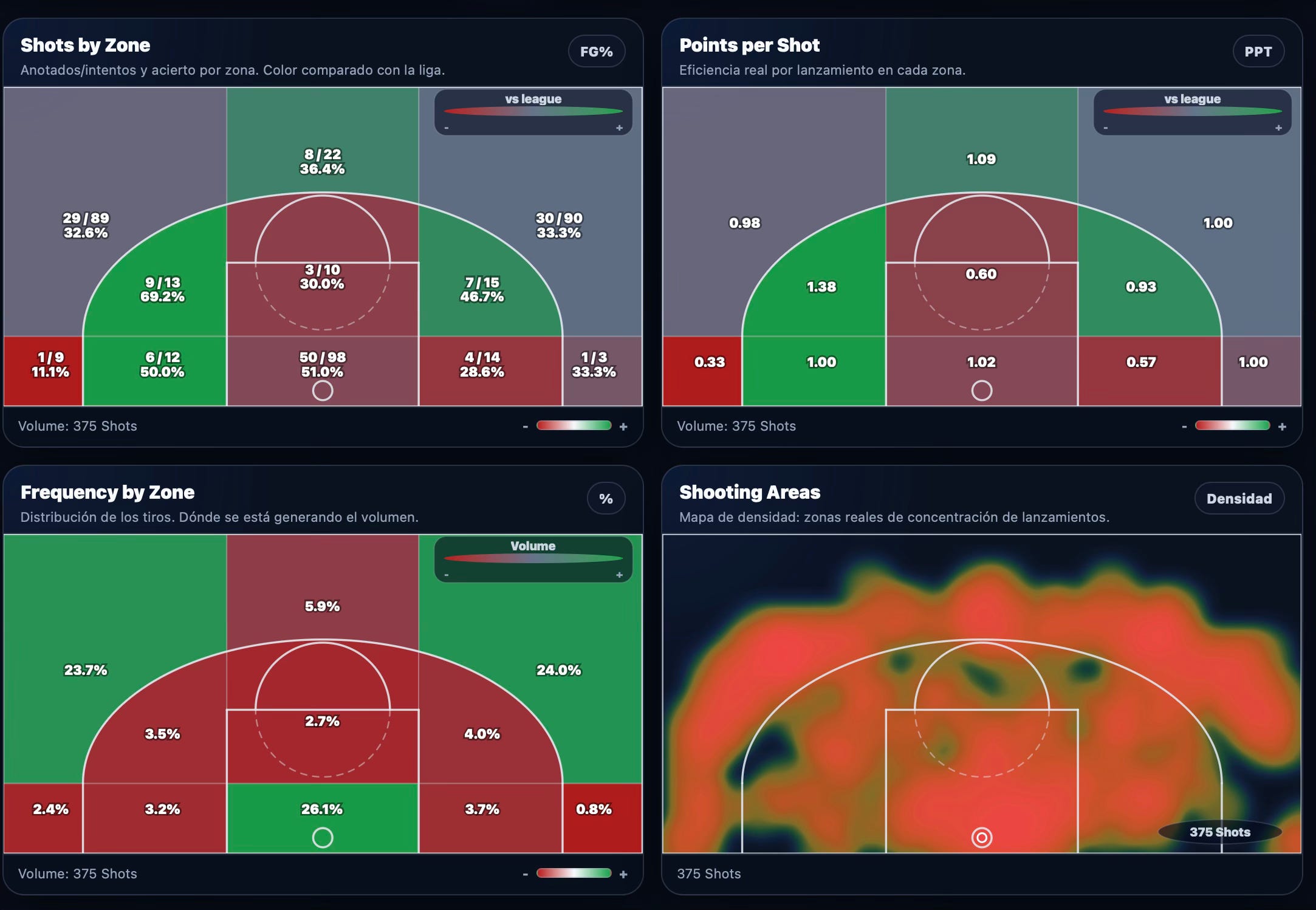
Sticking with the offensive side of the ball, while Kayil has shown some intriguing defensive flashes that I’ll touch on later, his offense remains the more compelling aspect of his game right now. However, his intrigue lies in somewhat odd areas of his game given the physical strengths that he has. Of the many areas of Kayil’s game that I find to be puzzling, easily the most confusing is his heavy reliance on the outside shot. Now, before I say anything else, I don’t want to suggest that the volume of three-point shots that he takes is a bad thing, as it is especially encouraging for jumbo guards to both be comfortable and willing to hoist outside shots. However, when considering that the three-ball accounts for well over half of his shot diet and he isn’t getting to the rim at nearly the rate that he should given his size, questions around his overall offensive impact begin to get raised. This past year with Alba, Kayil posted a 56.8% three-point attempt rate, which is wildly high considering he made just 32.2% of his outside shots. This isn’t just some poor shooting plague that came over him either, as in FIBA, Kayil also struggled to make outside shots, shooting just 31.6% from three. It is fair to assume that with a more reasonable shot diet and lower volume, Kayil could easily be sitting around 35% from three and be looked at in a much more favorable light. However, just assuming that he can turn a chunk of his three-point attempts into rim attempts or mid-range shots is easier said than done, especially considering the tools he lacks athletically. But even with all that said, I still project Kayil to be a solid shooter long term. His touch indicators of high volume, solid mid-range touch, and free-throw touch are all there, along with his form being solid. Kayil has a high release that allows him to get contested shots off both the catch and the dribble, allowing him to rise over defenders even when he doesn’t have a ton of room. The result of this is a lot of wild closeouts — opportunities that he could turn into driving opportunities — but for now they result in a lot of fouls drawn on shots. However, because of his high release, which is posted fairly vertically, defenders rarely seem able to get to it, even if they are tight to his hip. The result: a lot of fouls drawn and one-and-one opportunities on outside shots, which is definitely an interesting skill to have.
Grahics via Data4Basket
Spinning back to his downhill attacking, which, as I hinted at earlier, is a wildly disappointing aspect of his game. Not because he lacks the tools to make plays or hasn’t shown flashes of ability, but rather because of his unwillingness and lack of polish. The entire basis of Kayil’s downhill game is physicality, both seeking out and playing through contact, something he has to do given his lack of elite speed. As I mentioned earlier, he does a great job of playing through defenders’ chests, using his shoulders, balance, and footwork to create opportunities. As I’m sure you can imagine, as a result of this physical approach, Kayil is no stranger to getting to the free-throw line, posting a 50.9% free-throw rate, with a surprising chunk of that total coming from jump shots. As for his actual rim finishing, well, it’s not good. Kayil really struggles to adjust midair and create finishing angles for himself, resulting in him converting just 51% of his rim attempts last year. Even more concerning is the fact that he almost never got there, with just 26.1% of his entire shot diet coming at the rim. Kayil’s lack of feel around the basket is especially apparent with rim protectors present, consistently proving to be both unwilling and timid when faced with a true shot-blocking presence. In those instances, he chooses to pull back and settle in the mid-range, where he was relatively solid, converting on 45.3% of his non-rim twos. With that in mind, a lot of NBA projection for guards, especially bigger ones, is predicated on the ability to get to and finish at the rim, an area that is arguably his biggest flaw as of now.
Video via Nellb
And of course, I would be remiss if I broke down a point guard and didn’t discuss playmaking prowess. In Kayil’s case, passing is more of a necessity for his playstyle rather than a true weapon he utilizes. What I mean by that is he makes the passes that he should make in order to remain steady within the flow of the game, but he isn’t a guy who is going to tear down opposing defenses with his playmaking. Kayil was tasked with carrying a 28.4% usage rate last season, meaning that in order for Alba’s offense to function, he had to at least be a steady hand. And as much as I would love to say that he was more than a steady hand, he wasn’t. Kayil posted a solid 20.8% assist rate and a 1.6 assist-to-turnover ratio, two marks that are solid but don’t suggest a high-end playmaking feel. The majority of the passes he makes are within-structure passes, meaning pick-and-roll pocket passes, dump-offs on drives, one-more passes, high-low passes, easy drive-and-kicks, and other things along those lines. Rarely did Kayil make a tantalizing pass that left me in awe or fit a risky pass through a tight window. Some may suggest that the reasoning for this is the overall structure of his offense, requiring him to stay turnover-averse and stick to the plan, but even if that were true, Kayil wasn’t a guy putting immense pressure on opposing defenses as a proactive playmaker. I will give him credit, however, as it is undeniably true that he does a great job of protecting the ball. Kayil posted just a 13.3% turnover rate, which isn’t perfect but is by no means less than ideal for a point guard. He did a great job of handling defensive pressure that other teams threw his way, using his frame and length to protect his live dribble and get the ball where it needed to go. An area where Kayil did get a bit rushed with the ball was in the pick-and-roll, as when teams threw different defensive coverages at him over the course of a game, he seemed to get overwhelmed. He typically did a solid job of reacting to the first few coverages, staying out of harm’s way and leading the offense where it needed to go. But if teams were to mix up blitzing, hard hedging, and icing with the occasional soft hedge or drop-coverage rep, he almost seemed overambitious in trying to take advantage of the open space, leading to a sloppy rep. This is likely just a product of inexperience and is something that coaches can definitely iron out over time, but nonetheless it is a bad look for the time being, possibly suggesting poor feel for the point guard spot.
Defensives Flashes
Much like seemingly every other aspect of his game, defense is too a spot where Kayil has shown flashes of promise but has yet to put it all together. Being 6-foot-6 does give him a bit more leeway on this end of the floor, especially as a guard, because even if he turns out to be average positionally, his size will allow him to scale up and down opposing rosters. However, becoming an average NBA defender is no simple task and one that is often oversimplified when evaluating prospects. In Kayil’s case, I’m not quite sure he’s there yet. His point-of-attack defense is a very mixed bag. On one hand, he is aggressive and utilizes a lot of his strengths to his advantage when guarding the ball. Kayil does a great job of catching guys with his chest and holding his ground, letting his arms do the work, poking at loose dribbles, and making sure the opposing offensive player stays honest. But for seemingly everything he has working for him, there is an equal part working against him, and in this case it’s his technique. As I previously mentioned, Kayil isn’t a great athlete as is, and that translates to the defensive side of the ball, where he isn’t able to glide side to side as well as some others. This wouldn’t be as much of an issue if his defensive technique wasn’t as bad as it is either, as Kayil positions himself with a very upright stance at the point of attack. As a result, quicker, shiftier guards can open his hips relatively easily and create advantages downhill on him, while stronger guards and most wings can bump him out of the way and create space through physicality. However, given the group of guards in the league Kayil played in, there weren’t too many players who could truly outmatch him, allowing him to get away with a lot of technical issues. Because of this, I fully expect there to be a hefty adjustment period for him when making the leap to the NBA, as there is no doubt that NBA guards can exploit his shortcomings.
Video via Nellb
As for how he operates off the ball, I am left wildly underwhelmed. Kayil was just flat-out timid and oftentimes lost when guarding away from the action, often getting lulled to sleep and allowing easy action to sneak by him. He was back-cut far too frequently for my liking and seemingly multiple times every game he was blindsided by a screen that came as a result of poor positioning. To add insult to injury, he isn’t particularly aggressive away from the ball, especially for someone with his physical tools. Kayil posted just a 2.2% steal rate — a fair majority of which came on the ball — and a 0.4% block rate. Blocks are by no means a necessity for a guard, but to block shots at such a low rate despite having the height advantage in the majority of his matchups suggests a possible lack of defensive feel. The majority of the time, Kayil relies on his physical gifts to get him by defensively, not taking calculated risks and rarely trusting his instincts. I do believe that with the right coaching and in the right defensive system, Kayil can end up being a solid defender, but for now, there are plenty of reasons to be skeptical.
NBA Projection
Kayil has a long way to go before he is ready to make a positive impact at the NBA level. Yes, he has a lot of raw skill and tools that will be fun to build off, but there is no doubt that Kayil is behind in a lot of the more technical aspects of the game. He needs more balance in his shot chart and has to show more nuance as a playmaker if he wishes to be a point guard. If Kayil is going to move off the ball, then he has to be a more proactive player and a far more consistent shooter. Defensively, despite having a great foundation, he still has a plethora of areas he needs to improve upon, along with possibly having to make a complete shift in how he approaches that side of the basketball. To put it simply, Kayil’s NBA outlook is heavily predicated on the spot he lands in and the patience that team has with his development. I love the fact that I’m hearing rumors of him having a draft promise because that makes me think a team has a vision for how they plan on using and developing him. But even with that promise, the road ahead for Kayil is by no means easy. A majority of his development will likely have to come through game reps in the Summer League, G League, or possibly even overseas if he ends up being a draft-and-stash candidate. These lower-level environments are great for confidence-building and skill development, but nothing can replicate NBA game reps quite like NBA game reps — something I just don’t think Kayil is ready for yet. As a result, the road ahead is treacherous, but it is by no means impossible that Jack Kayil ends up becoming a solid NBA player with the right tweaks to his game.