

Redefining Draft Decisions: The Age of NIL
NIL has shaken the NCAA landscape- but how does it effect the NBA Draft?
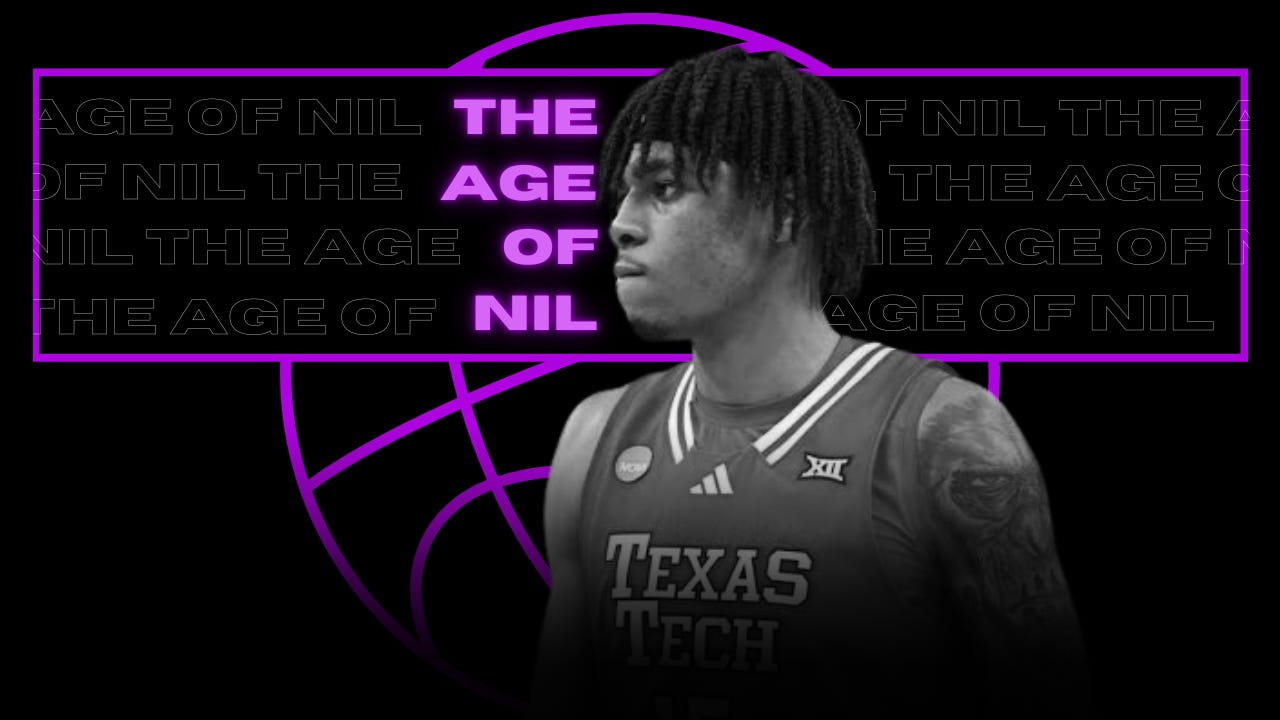
Since 2021, NCAA student-athletes have profited from their name, image, and likeness (NIL). While empowering NCAA athletes more than ever, its effects have rippled through professional sports, specifically the NBA. In draft spaces, it’s been theorized for the past couple of years that NIL was inevitable. Players would eventually opt to return to university due to the simple fact that they would make more money. In 2025, the day of reckoning has finally come to fruition.
Just 106 players appeared on the NBA Draft’s early entry list this year, the lowest since 2015. From 2021 to 2024, an average of 271 players were on the early entry list. The incentives of returning to school have finally outweighed going through the draft process, with top prospects now able to earn big money at the college level. In practical terms, many upper-level students who once would have left school stay in college longer to capitalize on NIL deals and continue developing. More money is to be made staying in school rather than being a late first to second round pick.
All About the Money
Let’s take Texas Tech’s JT Toppin as an example. Heading into the season, Toppin was a highly anticipated transfer with NBA upside. While testing the draft waters last cycle, the big opted to transfer to the Red Raiders for increased exposure. Throughout the season, his play cemented him as one of the best players in college basketball and a perennial first-round talent. The combination of athleticism, defensive instincts, and rebounding awed NBA scouts, making his decision to stay for a Junior year all the more shocking. Without a doubt, it was motivated by financial incentives. According to On3, Toppin’s NIL value in 2025 was about 2.3 million dollars- the second most in all of college basketball behind Cooper Flagg. Matt Norlander reported that Toppin would receive up to 4 million for the next season. How does this stack up to the money he would’ve made in the pros? The average salary for a player selected between picks 20 and 30 next year is approximately 2.5 million, with no guaranteed money/contract for a player selected outside the first round. With Toppin projected as a late first-round pick, the choice to return to college was not justifiable, but strategic. By staying another year, he not only secures more money than he likely would’ve earned as a rookie on a non-guaranteed deal but also buys himself time to refine his game, build his brand, and potentially solidify a higher draft position in 2026.
While this is just one scenario, it illustrates the shift in the NBA draft, as front offices can no longer assume every borderline first-rounder will declare. College basketball is no longer just a stepping stone but a viable destination for financial security, brand development, and personal growth. For years, NBA front offices could assume that top 60 prospects, particularly upper-level students with solid resumes, would enter the draft regardless of projected slot. That assumption is no longer safe. Instead, organizations must recalibrate their scouting timelines and expectations. Guys like Toppin, UConn’s Alex Karaban, and UAB’s Yaxel Landelborg, who in previous years might’ve been a guaranteed early entrant, have now become the face of a broader movement of talent choosing to stay in college over the uncertainty that comes with being a professional athlete.
And it’s not just the fact that money talks. NIL allows athletes to remain in environments where they are popular and valued consistently. Players can continue developing in systems tailored to their strengths, surrounded by coaches and support staff invested in their long-term growth. They can also manage minutes, workload, and off-court responsibilities more gradually than in the grind of the G League or the fringes of an NBA roster. Add the growing media exposure, individual endorsement opportunities, and the evolution of college basketball’s national profile, and the decision to stay becomes even more appealing. The transfer portal also allows for a fresh start for players looking for new opportunities to grow their brand and exposure simultaneously.
The Real Consequences
So what’s the real effect on NBA drafting strategies and philosophies? As more fringe freshmen, sophomores, and juniors opt to return, it creates a polarizing draft pool. Two ends of the spectrum increasingly define the draft class: high-upside first-year students with raw talent and developed seniors who can be plugged into various systems from the get-go. That middle ground, where sophomore or junior prospects once thrived, has begun to thin out. In previous years, these players might’ve entered with the hope of sneaking into the late first round or impressing in pre-draft workouts. Many are making the financially and developmentally sound decision to stay in college, ultimately thinning the draft class.
The new NBA Collective Bargaining Agreement, or CBA, raises the stakes of drafting well, as teams increasingly depend on affordable, controllable, and tradable contracts to maintain financial flexibility and avoid harsh luxury tax penalties. With the second apron limiting traditional roster building, it’s more important than ever to hit on draft picks on their rookie scale contracts. This makes the second and even the late first round crucial real estate for teams looking to find value and depth without compromising their salary cap. However, NIL has disrupted that equation. With more seasoned, draftable players staying in college to cash in on lucrative deals, the pool of experienced, high-floor prospects slipping to the later stages of the draft has shrunk considerably. Teams will still find their gems in the late first/early second. Yet, the weakened class from NIL will force front offices to bet on upside swings or unproven talent with questions about scalability. In return, it’s a slimmer margin of error than ever.