

Trent Pierce Scouting Deepdive
Despite missing nearly half of his junior season, Missouri wing Trent Pierce has emerged as one of the most intriguing 3&D prospects in the 2026 draft class
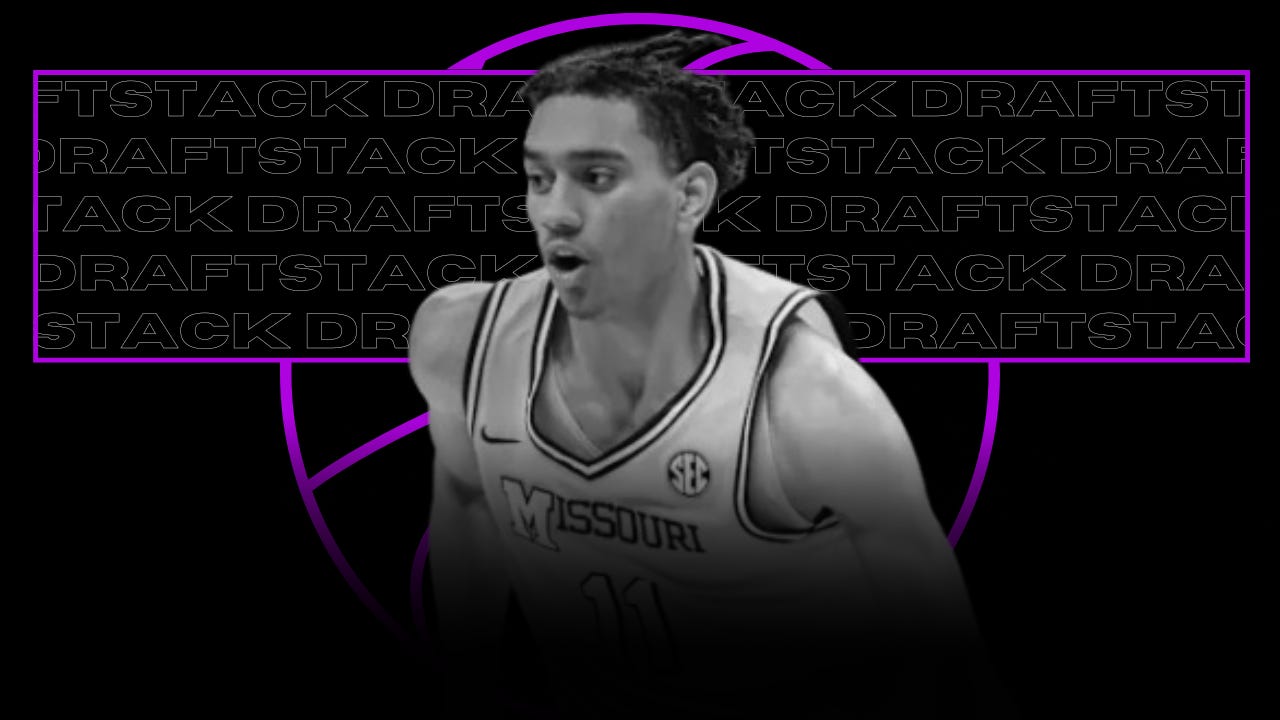
Entering this season, Trent Pierce wasn’t a name that many were seriously considering as a potential NBA Draft candidate. The junior was coming off a less-than-stellar underclassman stint that saw him play a limited role for an average Tigers squad during his sophomore season. He struggled in basically every area of the game, and his thin 6’10” frame kept him from comfortably slotting in at any specific position. To make matters worse, he started his junior campaign benched with a lower body injury, which would keep him off the court through the first two months of the season. Despite dealing with significant setbacks, his impact was immediately felt once he returned in January, and as of late, he’s emerged as a go-to offensive option. He’s developed physically, has showcased an advanced skillset, and is beginning to break into the draft conversation.
Player Profile:
Trent Pierce is a 6’10” and 225lb shooting guard/wing from Tulsa, Oklahoma who finished his high school career with Arizona Compass Prep. By the end of his prep tenure, he was ranked just outside of the top 100 in the class of 2023 and was designated as a four-star recruit. He headlined Missouri’s 2023 recruiting class, which also featured Anthony Robinson II, another junior who has made himself useful for the Tigers this season. Before committing to Missouri and head coach Dennis Gates, he took visits to Oklahoma, Oklahoma State, and Minnesota. He also held offers from Florida, Illinois, and several others.
Pierce played a very limited role throughout his freshman season, averaging less than 7 minutes per game in 21 appearances. In those occasional minutes, he was very inefficient on the offensive end and incapable of physically matching up defensively. His sophomore campaign was a bit more successful. He started in 19 games for a much-improved Tigers squad and showcased significant growth on both ends of the court. That season, he posted averages of 6.7 points per game, 3.2 rebounds, 1 assist, .6 steals, and .2 blocks on shooting splits of 47.2% from the field, 33% from beyond the arc, and 58.1% from the free-throw line.
At the beginning of his junior season, it was announced that Pierce had suffered an unspecified lower body injury and would be out for the foreseeable future. He ended up missing the team’s first 13 games of the year, returning to the floor in a limited role at the beginning of January. Since then, he’s elevated himself into a starting role and, as of late, has been an occasional primary option for the Tigers. He’s emerged as the team’s best outside shooter, has improved as an all-around offensive operative, and has taken major steps forward on the defensive end. At the time of my writing this, he’s averaging 10.8 points per game, 3.9 rebounds, 1.1 assists, 1.1 steals, and .3 blocks on shooting splits of 49.7% from the field, 40.4% from three, and 73.7% from the charity stripe.
Interior Scoring:
Previous to this season, Pierce struggled to diversify his interior scoring arsenal, mostly because of his slight frame and fluctuating role. Almost all of his at-the-rim attempts came via off-ball actions or through opportunistic dirty work. This year, he has further polished those elements of his interior scoring game while adding to his toolbelt. He’s still not much of a self-creator from any level, but he’s at least more comfortable putting the ball on the floor, driving to the hoop, and finishing through contact. He’s shown flashes of doing even more than that, as he’ll occasionally flash a smooth handle, but that’s a rare sight. For the most part, he’s improved upon what he was already doing while extending his off-ball work to other areas of the court.
Missouri is a very big team, and Pierce plays like an off-ball shooting guard. Because of this, he often matches up against players who are significantly smaller than him, and the Tigers coaching staff uses this to put him in excellent positions around the rim. This probably isn’t overly viable when considering a potential role in the NBA, but I’d imagine it’ll be possible depending on matchups. What I’m more interested in is his obvious finishing feel and ability to convert attempts despite contact. In most of these situations, he’s not necessarily absorbing contact, but instead finishing despite fouls. He is able to occasionally flash his vertical athleticism in these situations, but not to the same extent he’s able to in transition or slashing from the perimeter.
Because of his emergence as one of the most dangerous outside shooters in the nation, defenders are forced to aggressively closeout to him when he receives a pass beyond the arc. When this occurs while he’s stationed in the corner, he loves to attack said closeouts for at-the-rim opportunities. He has enough burst and body control to successfully convert attempts in these situations even when the closeout isn’t overly aggressive. This is probably where he’s at his best as an above-the-rim finisher, but even when he doesn’t feel comfortable going up for dunks, he’s able to maintain his composure and finish layups around-the-rim.
Pierce is still developing as a ball handler and self-creator. He rarely attempts to put the ball on the floor and drive to the hoop from the perimeter, and he’s been mostly unsuccessful when he has tried. That said, it is still impressive that a 6’10” player feels comfortable enough to attempt these looks, and perhaps that confidence will result in tangible results in the future. He will never be asked to create his own offense, so his inability to do so effectively as of today doesn’t bother me. If he can develop some semblance of an off-the-dribble scoring game, that will serve merely as a cherry on top of the rest of his game.
An area where Pierce has looked like a pro this season is the fast break. This is where he’s best able to combine all of his strengths, and he adds to that a willingness to get out in the open court as often as possible. His biggest advantage is actually his speed. He’s just as quick in transition as most smaller guards, allowing him to, at the very least, stay even with opponents. Combine this with his size and ability to put the ball on the floor and it makes for a dangerous fast break skillset. I do think that his transition urgency has probably weakened his rebounding numbers, but considering the size of Missouri’s frontcourt, they really don’t need additional rebounders. All in all, while Pierce is certainly a flawed interior scorer with room to grow, his scoring from this level is versatile enough to support his output from other areas.
Mid-Range Scoring:
Pierce isn’t much of a mid-range scorer, especially compared to other strong outside shooters who are limited drivers. Most of those players shoot too many mid-range jumpers because they’re unable to consistently reach the hoop, but Pierce probably gets his fill of at-the-rim attempts because of his off-ball work. He shies away from the mid-range, which is a big reason for his efficient scoring this season. That said, he does attempt hook and push shots from the short mid-range from time to time, and he’s found success on these looks despite their small sample size.
It makes sense that Pierce has found success on these attempts considering his physical profile and finishing feel. His 6’10” frame and long arms allow him to bully smaller opponents even if he isn’t the heaviest. His quickness, both as a mover and as it pertains to his shot motion, gives him an advantage against true frontcourt opponents. Depending on his matchup and the situation he finds himself in, these shots are a viable option when he doesn’t feel like an at-the-rim look is going to present itself. Do I wish he had some semblance of a mid-range pull-up game? Sure. But not having that shot in his arsenal doesn’t greatly impact his or his team’s game, so whether or not he develops that shot, I think he’ll be alright in the long run.
Outside Shooting:
This is the section I’m most excited to write, because it’s the part of Pierce’s game that excites the most. At nearly 7-feet tall, he’s one of the best long-range shooters in the country. That sentence can be occasionally written when discussing draft prospects, but it usually applies to a stretch big capable of stepping out and knocking down a couple threes per game. That description doesn’t quite do the trick for Pierce. He’s a very real movement shooter with a lightning quick release, he’s an elite catch-and-shoot operative, and he’s a pro-ready three-point shooting wing.
Whether he’s attempting threes or not, Pierce does a ton of damage to opposing defensive gameplans, as he must be face guarded if a team wants to impact potential attempts. Because he’s so much taller than most of his matchups, traditional closeouts don’t usually do the trick. His snappy shot motion further bolsters this advantage. He’s an elite standstill catch-and-shoot agent, but he often opts to take rhythm steps either before or once the ball hits his hands. He’s flashed his ability to knock down no-dip catch-and-shoot threes throughout this season, a skill that would make his outside shot nearly impossible to defend. Even if he never develops into a potent off-the-dribble three-point shooter, his off-ball work will be held at a premium moving forward.
He’s incredibly mobile for his size, something that makes him even more of a handful from long range. Even when defenders stick with him, he’s capable of sprinting around a screen, receiving a pass, squaring his body up, and knocking down a triple. His body control is quite impressive, but he’s actually able to knock down these looks without fully squaring his body to the basket. The Missouri coaching staff does not run enough plays to put Pierce in these situations as they probably should, but I fully expect him to get more opportunities to show off his skills in the future. If he spends another year with the Tigers, or if he transfers elsewhere, I expect to see his movement shooting utilized to its full capacity next year.
Passing & Playmaking:
His passing isn’t overly important to Missouri’s offensive gameplan, but it certainly doesn’t keep them from reaching their objectives. He’s a competent connective passer who rarely turns the ball over, and he’ll occasionally showcase high-end passing feel that isn’t normally expected of him. Because of his gravity, I think his passing could become a greater focus for Missouri as we near the end of the season. The team doesn’t have a pass-first point guard, and a few of their primary ball handlers can sometimes be ball stoppers, so I don’t think it would hurt to ask Pierce to shoulder a bit more passing and playmaking weight.
I think what makes Pierce an intriguing passer is that every one of his assists looks different from the last. That said, I wouldn’t call him an overly creative passer. Instead, I think it suggests that he’s capable of making a good play from basically any position on the court and no matter the situation he finds himself in. He’s very clearly a good decision maker and all-around basketball thinker, which usually results in competent and scalable professionals. This does raise his ceiling, at least marginally, in my eyes.
As I mentioned, Pierce has legitimate gravity even though he’s not a volume scorer or incredibly potent driver. This allows him to utilize his passing feel and find open teammates around the perimeter whenever defenders sag toward him on his drives. His snappy connective passing also gives teammates more time to get their shots off. He’ll never be a go-to ball handler for his team, but his outside shooting will allow him to put the ball on the floor here and there when attacking closeouts, and that’s when his passing will shine. Because of increased spacing at the professional level, it wouldn’t surprise me if his passing popped off the screen more at the next level than it does today.
Rebounding:
If you’re a box score watcher, you probably don’t think too highly of Pierce’s rebounding. At 6’10” he grabs less than four rebounds per game. When you watch the games, though, you realize why his average in this department isn’t higher, and just how impactful he can be on the glass. When he starts games (which he’s done recently), he spends most of his minutes with Mark Mitchell and Shawn Phillips Jr, two big time rebounders. When he comes off the bench, he plays more minutes alongside 7’5” Trent Burns, who’s really only on the floor to block shots and clean the glass. None of these guys have big rebounding numbers because they share the floor with one another, but each of them would be notable glass cleaners if they belonged to a different program.
Unlike those previously mentioned teammates of Pierce, he does a lot of his rebounding work on the offensive end. He’s an excellent putback agent who applies a ton of rim pressure when shots go up. He’s also good at going back up for easy layups after grabbing a board. Mitchell and Phillips are great at boxing out opposing frontcourts, allowing Pierce to use his oversized frame to grab rebounds over smaller opponents. This will continue to be the case as he transitions to the professional level and shares the court with even bigger teammates. If he strengthens his frame at some point in the future, I could see him developing into a better two-way rebounder, allowing him to spend more time at the power forward position if an organization wants to use him in that way.
Defense:
While Pierce’s intrigue is primarily generated via his unique offensive game, I think his defensive impact has flown well under the radar. Much like his rebounding, his defensive stats don’t pop off the state sheet (even though 1.1 steals per game as a near 7-foot wing isn’t too shabby). That said, he’s been a very helpful tertiary defender for the Tigers, and he’s been a big upgrade over the Tigers’ other wings. As we’ve already discussed, he’s very mobile for his size, and he’s seen major physical developments since he first arrived in Columbia. If he can maintain this mobility while continuing to strengthen his frame, I don’t think he’ll struggle to match up at the next level.
He’s definitely a conservative defender, rarely taking risks or playing with a playmaking mindset. Despite spending most of his defensive possessions away from the ball, he rarely jumps passing lanes. Instead, because he knows he’s capable of moving his feet with quicker guards, he allows his matchup to receive the pass and test their mettle against him. What makes him a special defender is his positional versatility. While he wouldn’t be your first choice to defend a back-down big, he can hold his own. He’s also able to slide his feet while moving downhill alongside small drivers. I feel comfortable projecting him to comfortably defend two-through-four while moonlighting as a center against smaller lineups.
He’s found a ton of success when matched up against traditional wings and bigger shooting guards. These players are usually not quick enough to gain a major advantage against him on their drives, allowing him to maintain strong position and contest shots. In these positions, his height and length allow him to come up with blocks and steals that most players aren’t able to generate. While I doubt he ever develops into a legitimate rim protector (it just doesn’t appear to be a likely outcome of his developmental trajectory), I do think he’ll continue to give traditional wings trouble. In these matchups, he’ll usually be the faster and more physically gifted player. As long as that remains true, I see no reason not to project him to make a defensive impact at the professional level.
Summary:
Before I summarize Pierce’s game, I want to list out any and all of his weaknesses and flaws in an effort to garner a more well-rounded understanding of his game. It’s worth noting that Pierce has had an odd season. He wasn’t a notable player prior to this year, and he missed the first half of his junior campaign because of an injury. He didn’t step into the starting lineup until the final few weeks of the regular season, and his role is still somewhat limited. Because of these circumstances, he does have his fair share of weaknesses and they tend to be magnified. That said, he’s still an excellent player despite them, and I think he’s a prime candidate to continue getting better.
A flaw that, if fixed, could greatly change his game and strengthen his long-term outlook, is his questionable handle. If he wants to continue playing the two and the three, he’ll have to improve as a ball handler. His dribble package usually goes unused, limiting his scoring from all three levels and lessening his assist opportunities.
Because of his slight frame, he struggles to absorb contact on his drives and at-the-rim attempts. He’s actually rather good at maintaining ball control through slaps and pesky fouls, but he’s not great in body-to-body situations.
His vertical athleticism and above-the-rim finishing have come and gone throughout this season. When slashing out of the corner or going up for putbacks, he appears impressive in this department. In most other situations, he could put his vertical athleticism to better use.
He has no mid-range pull-up game, something that could further diversify his offensive game and increase his gravity. He’s a smooth shooter from beyond the arc and sees driving opportunities, so I see no reason apart from confidence as to why he wouldn’t find success on these looks.
A lot of times when faced with a large interior defender, he’ll kick the ball out and reset the offense. I’d like to see him rely more on his hook and push shot arsenal in these situations. He’s found success on limited attempts, and I think these shots could become a major weapon for him down the road.
He passes up too many shots from beyond the arc. As of today, he’s only attempting 4.9 threes per game. I’d like to see that number closer to 7. He’s a truly elite long-range marksman, and when he’s making shots from that range Missouri is a totally different team.
His free-throw shooting has been underwhelming this year, a trend that goes back to last season. This does raise concerns about his long-term outlook as a three-point shooter. While I’m not worried about his outside shooting, I would like to see him make major improvement from the charity stripe. While I’m here, he also doesn’t draw enough contact or take enough free-throws.
Defensively, his only real weakness is his weight. He can still occasionally struggle to stick with strong forwards and wings, especially on backdowns. His length does sometimes make up for this, but I can’t confidently project that to continue at the professional level.
While foul trouble hasn’t been a major issue for him this season, it has occasionally reared its head. I expect this to emerge as a problem once he matches up against professional opponents.
I’ve mentioned this a few times throughout this article, but if you only study box scores, don’t watch games, and haven’t done your research, you may not be the biggest fan of Trent Pierce. On the other hand, if you know about his injury history and have been following his development for multiple seasons, it’s easy to see his appeal. He’s a 6’10” sharpshooter with more on-ball skills than most of his physical contemporaries, and his evident feel for the offensive game projects to pay dividends for a professional organization. Defensively, he’s able to match up against shooting guards, wings, and forwards while also offering small ball center acumen for teams that like to dabble with that strategy. His archetype is typically held at a premium in the modern NBA ecosystem, and he’s even more intriguing than most of these prospects because of his size and standout shooting. He still has a ton of room to grow, both mentally and physically, but I think he’s worth taking a swing on and I like his odds to carve out a role in the league.